

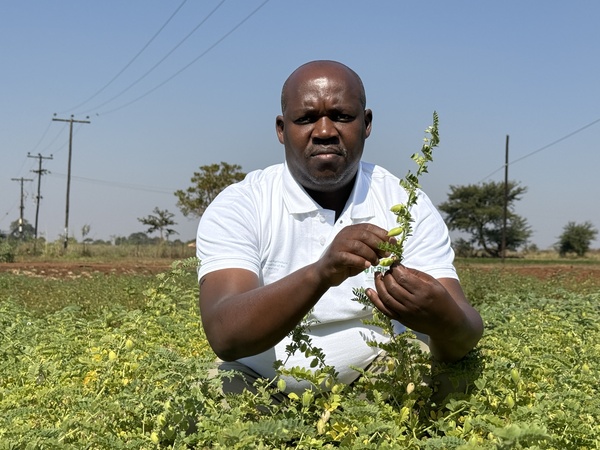
ICRISAT scientist and chickpea breeder Dr James Mwololo says frontier science and innovation in chickpea breeding are helping unlock the crop’s potential to reshape food systems across Southern Africa through the development of more resilient, nutritious, and market-ready varieties for farming communities facing increasing climate pressures.
The International Crops Research Institute for the Semi-Arid Tropics (ICRISAT) and its partners are scaling up climate-resilient chickpea seed production across Southern Africa to cushion farming communities grappling with rising fertilizer prices, climate pressures, and global supply chain disruptions straining food systems.
The initiative, supported by the Food and Agriculture Organization of the United Nations (FAO) through the Benefit-sharing Fund (BSF) of the International Treaty on Plant Genetic Resources for Food and Agriculture (ITPGRFA), is being implemented in Zambia, Malawi, and Mozambique in partnership with national agricultural institutions and Milele Agro-processors.
The programme seeks to improve livelihoods and strengthen food and nutrition security by promoting chickpea production among vulnerable farming communities across the region.
Unlike many cereal crops, chickpea requires lower nitrogen fertilizer inputs, making it a viable alternative for farmers struggling with rising production costs and increasingly harsh climatic conditions. The crop is also gaining popularity in domestic and export markets due to its nutritional value, adaptability to dry conditions, and income-generating potential.
Director General of International Crops Research Institute for the Semi-Arid Tropics, Dr Himanshu Pathak, said the initiative demonstrates the growing importance of resilient dryland crops and the role of agricultural science and innovation in helping farming communities cope with mounting climate and economic pressures.
He added that the programme also aligns with the Government of Malawi’s crop diversification agenda aimed at strengthening food and income security.
“With fertilizer prices and agricultural production costs continuing to rise globally, resilient legume crops such as chickpea are becoming increasingly important in helping farmers across Malawi and Southern Africa maintain productivity, strengthen food security, and reduce dependence on costly agricultural inputs,” said Dr Pathak.
The initiative is also supporting stronger market linkages by connecting research institutions, extension systems, seed producers, agrodealers, processors, and buyers across the chickpea value chain.
Although chickpea production in Malawi is currently concentrated mainly in the Southern Region, ICRISAT says there is significant potential to expand production into suitable agroecological zones in the Central and Northern regions to meet growing market demand.
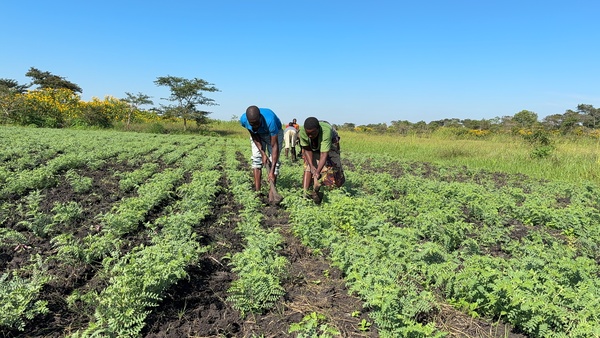
The regional initiative is being coordinated by ICRISAT scientist, legume breeder, and principal investigator of the project, Dr James Mwololo, who noted that farmers across Southern Africa are increasingly turning to crops capable of performing under harsher climatic conditions while still delivering reliable yields and market value.
“Across many dryland regions, farmers are facing rising production costs, declining soil fertility, and increasingly unpredictable weather patterns,” said Dr Mwololo.
“Chickpea is emerging as a strategic crop for dryland agriculture because it offers farmers a viable pathway to maintain productivity and incomes under increasingly difficult growing conditions.”
Dr Mwololo said farmers in Malawi are currently achieving average chickpea yields of about 833 kilogrammes per hectare, despite improved varieties having the potential to produce up to three tonnes per hectare.
“With greater access to quality seed, national production is expected to increase more than threefold from the 2022 baseline of 2,570 metric tons, while the number of farming households reached could expand from 22,000 to more than 66,000 by 2027,” he said.
Growing commercial demand for chickpea is also creating opportunities for agribusinesses and export markets as processors seek more reliable and climate-resilient supply chains.
Chief Executive Officer of Milele Agro-processors, Gloria Pekani, said the crop has significant potential for both domestic consumption and export markets across the region.
“Our partnership with ICRISAT goes beyond traditional improved seed development,” said Ms Pekani.
“It is also about creating both stronger market opportunities and supporting livelihoods for farmers, processors, and communities that increasingly depend on resilient crops such as chickpea.”
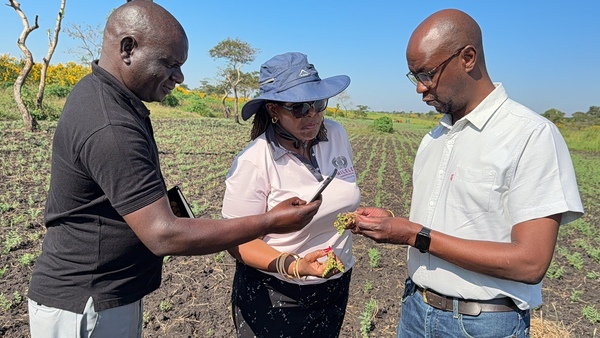 ICRISAT scientist and Malawi Country Representative Dr Sam Njoroge (right) engages with Milele Agro-processors on chickpea seed production at an ICRISAT research facility, highlighting a market-driven and inclusive approach to strengthening resilient seed systems across Southern Africa.
ICRISAT Country Representative for Malawi, Dr Sam Njoroge, said the increasing importance of chickpea highlights the need for more resilient and diversified farming systems capable of supporting livelihoods and long-term food security across Southern Africa and beyond.