

The International Crops Research Institute for the Semi-Arid Tropics (ICRISAT) and the International Maize and Wheat Improvement Center (CIMMYT) have launched a new five-year research initiative aimed at dramatically accelerating the development of climate-resilient and market-preferred crop varieties for dryland farmers in Africa and India.
The initiative, supported by the Novo Nordisk Foundation, seeks to “dramatically shorten the time required to develop climate-resilient and market-preferred crop varieties for farmers in the drylands of Eastern Africa and India”.
It will initially focus on sorghum and groundnut as proof-of-concept crops before expanding into a broader framework for dryland crop improvement across Africa and South Asia.
According to the partners, the programme responds to intensifying climate pressures that are already affecting agriculture in semi-arid regions. Dryland farming systems are increasingly threatened by drought, heat stress, erratic rainfall, declining soil fertility, and crop diseases—conditions that undermine food security and rural livelihoods for millions of smallholder farmers.
The initiative is designed to harness modern scientific tools, including predictive breeding, genomic technologies, and advanced data analytics, to speed up the development of improved crop varieties.
By integrating these technologies, the programme aims to boost the efficiency of crop breeding systems and deliver varieties that can withstand harsh environmental conditions while meeting farmers’ and market needs.
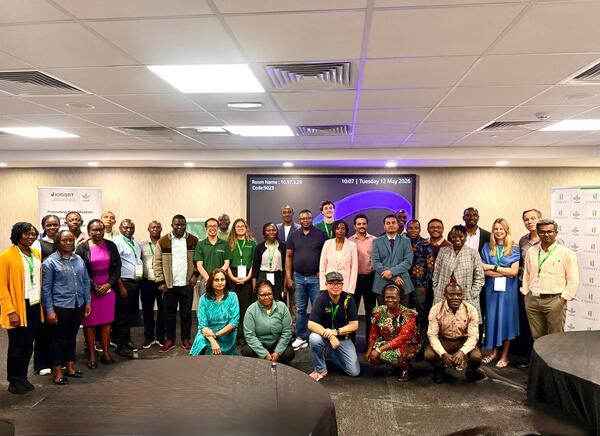
The partnership brings together CGIAR research centers, national agricultural research systems in countries such as Kenya, Ethiopia, Tanzania, and India, and global scientific partners including the University of Queensland. The collaboration is intended to ensure that innovation is not only science-driven but also locally relevant and scalable across diverse dryland environments.
ICRISAT and CIMMYT emphasized that collaboration is central to the initiative’s success. As one of the statements highlighted in the launch, “This initiative also reflects the immense power of collaboration across the CGIAR system and with national and global partners”.
The institutions also expressed appreciation for the support of the Novo Nordisk Foundation and other partners contributing to the effort.
The programme will focus on building a more efficient breeding pipeline that can deliver climate-resilient varieties faster to farmers who are most vulnerable to climate shocks. Researchers say the approach will help address long-standing gaps in agricultural innovation in dryland regions, where investment in crop improvement has often lagged behind that of more favorable farming systems.
Dryland agriculture supports more than two billion people globally, yet it remains highly exposed to climate variability and underinvestment. The new initiative aims to change this by strengthening agricultural research systems and accelerating the translation of scientific advances into practical solutions for farmers.
Ultimately, the partners say the initiative is about ensuring that smallholder farmers in Africa and India can access better seeds more quickly, helping them improve yields, stabilize incomes, and build resilience in the face of accelerating climate change.