


By Daniel Njiwa,
More than a decade ago, in what feels like a past life, I worked with the Common Market for Eastern and Southern Africa (COMESA). At the time, I was part of a team helping design what would become the Simplified Trade Regime (STR), a framework intended to ease cross-border trade across corridors linking Malawi, Tanzania, Mozambique and Zambia that are critical to strengthening agricultural markets across Southern and Eastern Africa.
The motivation was clear. Across Africa’s borders, thousands of small traders struggle to cross borders, let alone benefit from duty-free regional trade agreements hence the resort to informal trade. Yet they move a significant share of Africa’s food every day. Estimates from the African Agriculture Trade Monitor (2025) suggest that informal cross-border trade accounts for about 7–16 per cent of Africa’s total trade and up to 70 per cent of trade between neighboring countries, much of it involving agricultural products that rarely appear in official statistics.
Evidence from West Africa illustrates the scale of this trade. According to the ECOWAS Agricultural Trade Programme, intra-regional food trade in West Africa alone is worth about US$10 billion annually-six times higher than official statistics, reflecting large volumes of unrecorded agricultural trade. Women dominate this sector, accounting for about 70–80 per cent of informal cross-border traders, according to the International Trade Centre ITC.
Every day these traders move small quantities of food across borders: maize, beans, fruits, vegetables and other staples that keep regional markets functioning. Yet the customs procedures they faced were designed for large exporters, requiring documentation and processes that were nearly impossible for many small traders to navigate.
We realized that if regional trade integration was to work, it had to work for them too. So, we set out to design customs procedures that were simple enough for small traders to use, including those with limited formal education. The goal was straightforward: enable traders to cross formal borders safely, legally and efficiently while benefiting from duty-free regional trade.
We began with three simple tools: a Simplified Customs Document (SCD), a Simplified Certificate of Origin (SCOO) and a common list of products that both countries agreed could be traded duty-free. In 2010, the first pair of countries to launch the Simplified Trade Regime was Zambia and Malawi.
Over time, the system has evolved further. At some border posts today, the process has been simplified even more, with traders required to present only the Simplified Customs Document alongside the agreed list of goods effectively serving as a proxy for the certificate of origin. The objective has always remained the same: make cross-border trade easier and cheaper for the people who rely on it most.
Today, efforts are underway to expand this vision further to regional economic communities such as the East African Community promoting the system among EAC countries and Southern African Development Community (SADC) promoting it in Southern Africa. At the tripartite level across three regional economic communities, covering up to 30 African countries, there are efforts to establish a Tripartite Simplified Trade Regime framework. If adopted, this could allow more than 60 pairs of countries to implement simplified trade systems, dramatically transforming agricultural trade for millions of small-scale traders across the continent.
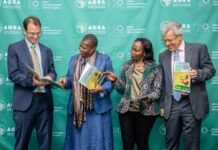
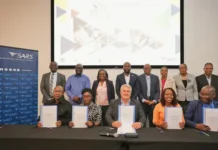
Encouragingly, we are already seeing steady progress. In addition to existing STRs between Zambia and Malawi, Zambia and Zimbabwe, fresh agreements have been signed between Malawi and Mozambique in 2024, and in March 2026 Malawi and Tanzania with support from AGRA.
The real significance of these agreements goes beyond individual borders. Together, they are helping establish a network of simplified trade corridors linking Malawi, Tanzania, Mozambique, Zambia and wider East African food corridors that are vital for strengthening regional agricultural markets, jobs and food systems resilience.
For two decades, AGRA has worked with governments, regional institutions and private sector partners to remove the structural barriers preventing small-scale farmers and traders particularly women and youth from participating fully in agricultural markets. This process has entailed partnerships with SMEs, financial institutions and regional bodies, that helped build inclusive market systems that move women and youth from subsistence activities to competitive participation in regional trade.
The Simplified Trade Regime, which has now been adopted in the framework of the African Continental Free Trade Area (AFCFTA), is one of the clearest examples of how this work translates into real impact. By simplifying customs procedures, strengthening trade information systems and supporting trader associations, these initiatives enable small traders to transition from informal routes into formal markets where they can grow their businesses with greater confidence.
Inclusive trade systems strengthen agricultural value chains, improve regional food security and ensure that the economic benefits of trade reach rural communities.
As we mark AGRA’s 20 -year journey of advancing agricultural transformation in Africa, our experience continues to demonstrate a simple truth: inclusive agricultural systems are more productive, resilient and economically transformative, especially when women and young entrepreneurs can participate fully in markets.
Simplified trade regimes are helping unlock that potential by ensuring regional trade works not only for large exporters, but also for the millions of small traders who power Africa’s food economy every day.
Africa’s borders should not be barriers to opportunity. They should be bridges connecting farmers, traders and markets across the continent and enabling a new generation of entrepreneurs to participate in Africa’s growing regional economy.
Njiwa is Director of Inclusive Markets, Trade and Finance at AGRA