



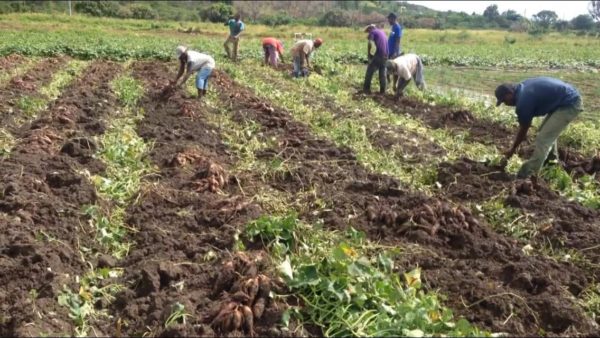
National Geographic Society and PepsiCo have announced five new grants to fund on-farm research aimed at accelerating regenerative agriculture in Ethiopia, supporting science-based solutions that strengthen soil health, improve climate resilience and increase productivity across key food crops.
The funded projects will focus on evidence-to-practice innovations across a range of food systems in Ethiopia, including wheat, maize (corn), potato and soy, alongside other global crop research.
While coffee systems were among the topics in some research proposals, the broader aim of the funding is to strengthen regenerative practices for multiple staple and high-value crops threatened by climate change and extreme weather.
The five scientists awarded grants join a global cohort of researchers and practitioners working under the National Geographic Society’s regenerative agriculture portfolio.
Their work will be grounded in field-based, on-farm investigations — meaning innovations will be tested directly where crops are grown, and solutions will be developed with farmer participation.
According to the Society’s initiative guidelines, supported projects must demonstrate measurable outcomes that build soil health, enhance climate adaptation capacities, bolster biodiversity and improve livelihoods within farming communities.
Eligible research focuses on a wide variety of terrestrial food crops — from cereals such as corn and wheat, to tubers like potatoes, and oilseeds including soy and sunflower, all of which are important in Ethiopia’s farming landscape.
“In a world facing soil degradation, unpredictable weather and tightening food systems, regenerative agriculture offers real promise,” said Ian Miller, Chief Science and Innovation Officer at the National Geographic Society. “Our support for these on-farm research projects is designed to empower farmers and local communities with practical knowledge — so they can strengthen the resilience of their farms, landscapes, and livelihoods.”
The funding forms part of Food for Tomorrow, a collaboration between the Society and PepsiCo that combines scientific research, storytelling and education to accelerate regenerative practices around the world. First launched in 2025, the program supports Explorers selected from hundreds of applicants across more than 140 countries.
Jim Andrew, Executive Vice President and Chief Sustainability Officer at PepsiCo, emphasized that regenerative approaches are central to future food security.
“Farmers have one chance each season to make a crop succeed. Strong science-backed practices matter because they build resilience, improve soil functions and help strengthen farmers’ economic stability,” he said.
The initiative aligns with broader efforts in Ethiopia to modernize agriculture and build climate resilience. Ethiopian government programs are expanding initiatives like cluster farming to scale cultivation of cereals such as wheat and maize across millions of hectares, while strategic investments seek to strengthen food security and farmer incomes.
By supporting regenerative research on a diversity of crops, the National Geographic Society and PepsiCo aim to ensure that innovations are relevant to Ethiopia’s varied agronomic conditions and development goals, helping smallholder farmers adapt to climate pressures while improving productivity and sustainability.







[…] 4 Mar – Ethiopia to boost regenerative agriculture in partnership with PepsiCo. National Geographic Society and PepsiCo’s Food for Tomorrow fund awarded five grants, […]
Comments are closed.