

As world leaders gather at the Munich Security Conference (13-15 February) amid rising geopolitical tensions, the International Fund for Agricultural Development (IFAD) is urging governments and investors to treat food security and rural investment as matters of global security.
“Fragile food systems pose an underestimated risk to global stability,” said Alvaro Lario, President of IFAD. “Specifically, access to productive land and reliable freshwater must be prioritized. Land and water deserve as much attention as rare minerals, if not more, as they are key to global stability,” added Lario.
Nearly 80 per cent of the world’s poorest people live in rural areas, where climate shocks, failing food systems and lack of opportunity are acting as force multipliers for conflict, displacement and regional instability.
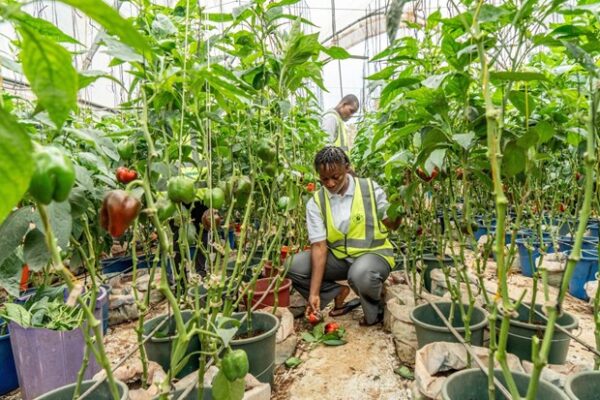
“When rural communities have access to productive land and water, food security improves, conflicts over resources decrease and economic opportunities arise,” added Lario.
Investing in small-scale producers and rural entrepreneurs to connect them to markets and finance, he said, “does not just promote opportunity and prosperity, it also strengthens the foundations of peace and safeguards some of our most valuable resources”.
IFAD works with governments, UN agencies and the private sector to align food security investments with broader security and foreign policy goals. For almost 50 years, IFAD has invested at the “first mile” of food systems – where food is grown and livelihoods are made – helping rural communities build resilience before shocks escalate into crises.
IFAD offers scalable, field-tested solutions that complement geopolitical and diplomatic efforts to build long-term global stability. For every dollar in core contributions, IFAD delivers US$6 in high‑impact investments, crowding in public, private and domestic finance and positioning the Fund as a frontline actor in promoting stability and prosperity. The Fund helps create the conditions in which private investment can flow into rural economies.
A recent three‑year impact assessment conducted by IFAD found that project participants recorded more than a one‑third increase in income, productive capacity, and market access. Such investments in rural economies address the root causes that push people towards violence, illicit economies or irregular migration, showing a direct impact on stability.
Evidence from IFAD’s portfolio shows clear security impacts. In Mali, districts that did not receive IFAD-supported agricultural programmes experienced an 8 per cent rise in local conflicts compared with those that did. In Ethiopia, a 1 per cent increase in land productivity was associated with a 3 per cent reduction in local conflicts.
It is estimated that 70 per cent of acutely food insecure people live in fragile or conflict-affected situations, with armed conflict nearly doubling since 2019. For 44 per cent of the acutely food insecure populations, conflict or insecurity is the main driver.