

Tanzania has emerged as a pivotal player in Africa’s collective push to eradicate peste des petits ruminants (PPR), a highly contagious viral disease that affects sheep and goats and continues to undermine the livelihoods of millions of smallholder farmers across the continent.
Strategically located between Eastern and Southern Africa, the country is increasingly viewed as a critical firewall against the southward spread of the disease, with its recent progress setting a new benchmark for animal health management and regional cooperation.
The turning point came on 16 July 2025, when President Samia Suluhu Hassan officially launched Tanzania’s five-year National Vaccination and Identification Campaign.
Backed by a substantial budget of TZS 216 billion (about USD 86 million), the nationwide programme aims to eliminate PPR and contagious bovine pleuropneumonia (CBPP), while also controlling Newcastle disease (ND) and other priority livestock diseases by 2030.
The initiative signals strong political will at the highest level and underscores the government’s commitment to protecting livestock-based livelihoods and strengthening national food security.
Over 17 million sheep and goats vaccinated
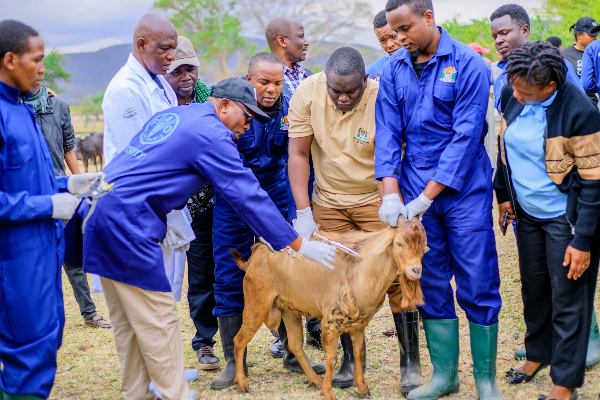
Just months after its launch, the campaign has already delivered results that few countries on the continent have matched. By October 2025, more than 17 million sheep and goats had been vaccinated against PPR across 14 regions of Tanzania. In total, 17.23 million doses of PPR vaccine had been distributed, representing an unprecedented scale of coverage in such a short time frame.
The effort has been bolstered by technical support and a donation of 3.9 million vaccine doses from the Food and Agriculture Organization of the United Nations (FAO), highlighting the importance of international partnerships in tackling transboundary animal diseases.
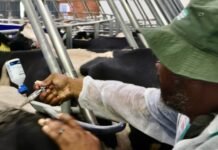
Beyond the numbers, Tanzania’s approach stands out for its integration of technology and data-driven disease management. Each vaccinated animal, immunised using a long-life PPR vaccine, is electronically identified with an ear tag and recorded in a national digital platform.
This real-time traceability system allows authorities to monitor vaccination coverage, track animal movements and strengthen disease surveillance with a level of transparency rarely seen in livestock systems in Africa. Officials say the digital platform is already improving planning, accountability and rapid response to potential outbreaks.
Significance beyond borders
Tanzania’s progress carries significance well beyond its borders. The country shares frontiers with eight nations — Kenya, Uganda, Rwanda, Burundi, Mozambique, Zambia, Malawi and the Democratic Republic of Congo — many of which face persistent PPR risks.
By rapidly expanding vaccination coverage and moving closer to national herd immunity, Tanzania is not only safeguarding its own livestock sector but also acting as a vital epidemiological buffer for Southern Africa, where the disease remains a constant threat.
PPR has long been recognised as one of the most economically devastating livestock diseases in Africa, disproportionately affecting small ruminants that are central to household incomes, nutrition and resilience for pastoralists and small-scale farmers.
Continental and global strategies, led by the African Union, FAO and the World Organisation for Animal Health (WOAH), have set an ambitious target of global PPR eradication by 2030. Tanzania’s campaign is now widely seen as a concrete demonstration that this goal is achievable with sufficient investment, coordination and political commitment.
As the programme enters its second year, the government, working closely with FAO, is focused on securing an additional 10 million vaccine doses to achieve full national coverage and sustain herd immunity.
FAO’s commitment of 2 million doses
FAO has already committed a further 2 million doses, with delivery currently underway. Authorities say maintaining momentum will be critical, particularly in hard-to-reach pastoral areas and border regions where disease transmission risks are highest.
Observers note that the leadership shown by President Hassan and the Ministry of Livestock and Fisheries has been central to the campaign’s early success.
By aligning national financing, veterinary services, digital systems and international support under a single coordinated strategy, Tanzania has created a model that could be replicated in other high-risk countries.
Tanzania’s experience illustrates the transformative impact of sustained national investment combined with global cooperation and evidence-based animal health systems.
As millions of animals are protected and farmers’ livelihoods secured, the country is not only strengthening its own food security but also pushing Africa closer to a future free from PPR by 2030.