

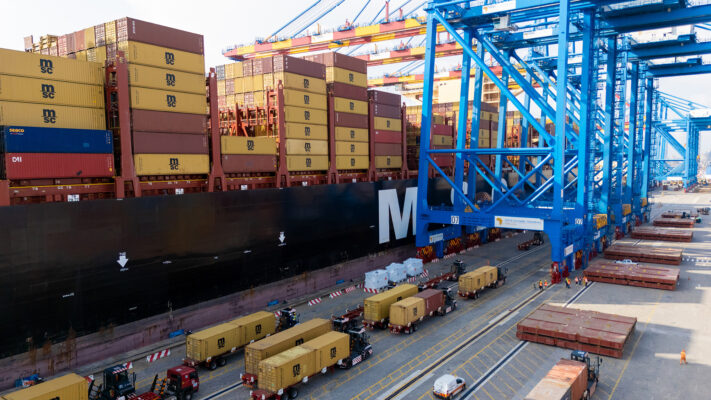
As demand for dependable inland logistics continues to rise across Africa, MSC Mediterranean Shipping Company is strengthening solutions around its long-established intermodal capabilities. While MSC has offered integrated rail, road, and port solutions across Africa for many years, the campaign is designed to raise awareness of the breadth of these inland services and demonstrate how MSC delivers true end-to-end transport beyond the port.
To highlight these capabilities, MSC is showcasing four strategic inland corridors that play a vital role in connecting landlocked regions to coastal gateways. Through insights from local experts, the initiative will spotlight operational realities along the Côte d’Ivoire–Burkina Faso, Cameroon, South Africa, and Kenya corridors, each central to the efficient movement of goods across some of Africa’s most commercially active supply chains.
The Côte d’Ivoire–Burkina Faso corridor, which stretches approximately 1,150 – 1,260 kilometres between the Port of Abidjan and Ouagadougou, supports significant trade flows across West Africa and connects two of the region’s fastest-growing economies. Similar economic importance exists across the Cameroon, South Africa, and Kenya corridors, each serving as essential conduits for high-growth sectors including agriculture, mining, FMCG, and temperature-controlled commodities.
Each instalment will showcase a strategic corridor where MSC has invested in expanding capacity, improving transit reliability, and offering customers a simplified, one-stop logistics solution from origin to destination. Reliable inland–port connections are becoming central to supporting economic activity across the continent as several countries continue to improve road and rail systems while advancing regional integration efforts under the African Continental Free Trade Area (AfCFTA).
AfCFTA, now signed by 54 countries and ratified by 47, is progressing through phased implementation with the goal of creating a single African market and boosting intra-African trade. MSC’s inland investments directly support this progress by improving corridor efficiency, reducing transit delays, and connecting landlocked producers to regional and global markets.
The Côte d’Ivoire–Burkina Faso rail connection is a high-demand route serving manufacturers, exporters, and importers moving cargo between Ouagadougou and the Port of Abidjan. Through MSC’s inland network, the corridor offers commercial advantages to customers by reducing bottlenecks, improving reliability during peak seasons, and providing a secure solution for time-sensitive goods.
Throughout 2026, MSC will highlight additional corridors in Cameroon, South Africa, and Kenya, each chosen for its commercial relevance to high-growth sectors such as agriculture, FMCG, mining, and temperature-controlled commodities. These solutions expand customers’ options for inland routes, enable better planning, and strengthen overall supply chain performance.
The campaign also supports the trade objectives of the African Continental Free Trade Area (AfCFTA), which aims to unlock intra-African business growth by improving the movement of goods across borders. By investing in modern inland logistics, MSC is giving customers broader market access and helping link landlocked producers with global trade routes.
“These corridors reflect our commitment to delivering competitive inland solutions that reduce complexity for our customers,” Caroline Trefault, Intermodal Africa Manager, MSC said. “By combining maritime strength with robust intermodal services, we are enabling businesses to move cargo more efficiently, reliably, and cost-effectively across Africa.”