

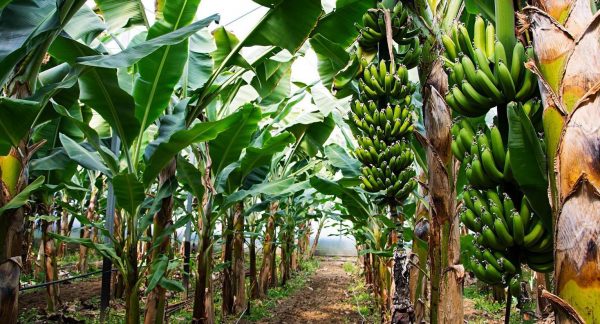
The introduction, propagation and dissemination of new varieties known as “Superior Banana Varieties” (SBVs), including FHIA hybrids and exotic landraces has significantly boosted banana production and household incomes among smallholder farmers in the Kagera region of Tanzania, revitalising a crop long plagued by pests, diseases and low yields.
According to a recent report by the International Institute of Tropical Agriculture (IITA), nearly two decades after SBVs were first introduced, about 48 per cent of households in Kagera have adopted these improved varieties, with FHIA 17 accounting for 25 per cent of adopters, FHIA 23 for 7 per cent and FHIA 25 for 4 per cent, because farmers appreciate their tolerance to pests and diseases, adaptability to poor soils, minimal fertilizer requirements and strong marketability.
The IITA report, titled Adoption and Impact of Superior Banana Varieties in Kagera, Tanzania, notes that Tanzania is the second-largest banana producer in Eastern Africa and that the Kagera region contributes more than half of the country’s banana output, making improvements in banana varieties economically and socially vital for rural livelihoods.
The SBVs comprise a mix of FHIA hybrids and exotic landraces that were propagated through government and non-government programmes, which worked with farmers to multiply and distribute planting materials, expanding the reach of higher-yielding bananas across the region.
Farmers who have adopted SBVs report marked improvements in household food security and dietary diversity as they produce greater quantities of bananas for both home consumption and sale, with women often taking the lead on decisions about selling surplus produce.
The report finds that productivity in Kagera increased by about 15 per cent due to the uptake of SBVs, adding nearly US $7 million annually to the regional economy through enhanced banana outputs, sales and associated trade and tax revenue.
Local banana growers, who traditionally battled low yields from vulnerable landraces, say the improved varieties have delivered stronger resistance to key constraints such as disease pressure and pest infestations while also producing heavier bunches that fetch better prices in local markets.
For many farmers, the financial benefits have translated into real-world gains, enabling investments in farm inputs, school fees for children and household improvements, signaling bananas’ broader role in rural economic resilience.
Experts involved in the study underscored that sustained farmer engagement in evaluating and promoting SBVs on farms has been critical to their widespread adoption and acceptance, strengthening trust in improved planting materials.
The IITA report also highlights that enhancing the resilience of the banana sector through research, scaling of improved varieties and supportive extension services will be key to further driving production gains and income growth for Tanzanian farmers in the future.
While improved matooke hybrids released by the Tanzania Agricultural Research Institute (TARI) in 2021 complement the SBVs, the IITA analysis suggests additional research and distribution efforts will help meet farmers’ evolving needs and expand the economic benefits of banana cultivation across the region.
As banana yields and incomes continue to rise, stakeholders say the model of participatory evaluation and on-farm dissemination of improved varieties offers a blueprint for scaling similar agricultural innovations that can bolster food security and livelihoods across East Africa.