

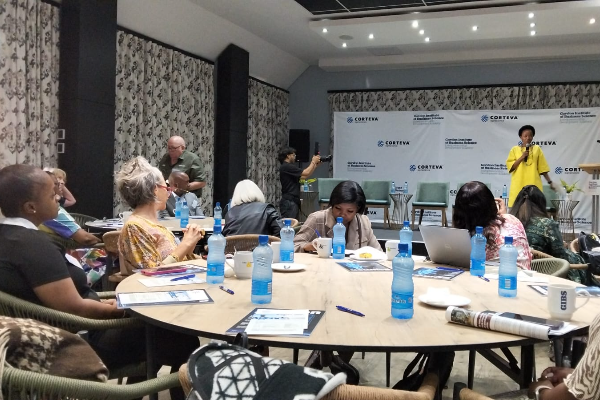
Corteva Agriscience, in partnership with the Gordon Institute of Business Science (GIBS), convened a high-level SoilSistas Media Roundtable yesterday in Johannesburg, bringing together key stakeholders to examine the role of women agripreneurs in reshaping South Africa’s food systems.
Held under the theme of innovation, inclusion and future-focused agriculture, the roundtable spotlighted how a new generation of women farmers is driving change across the agricultural value chain underscoring a broader shift from viewing women in agriculture as beneficiaries to recognising them as leaders, innovators and critical actors in food security.
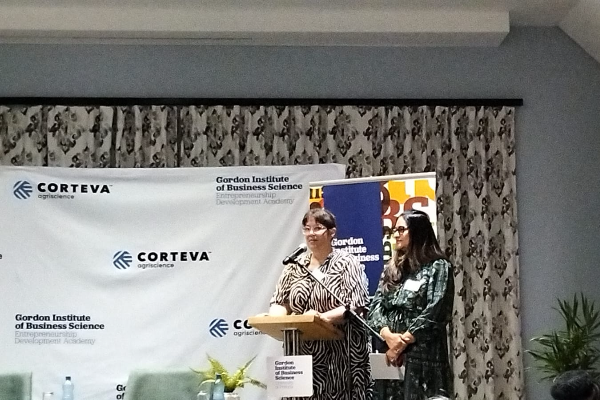
Opening the session, GIBS Programme Manager Mirriam Mashego highlighted that the SoilSistas initiative represents a long-term commitment to empowering women in agriculture noting that the programme goes beyond symbolic support, focusing instead on building sustainable businesses and fostering inclusive growth within the sector.
“This is not just an initiative, it is a commitment to women in agriculture, to innovation, and to building a sustainable and inclusive value chain,” she said, emphasizing the importance of intentional investment in women-led enterprises.
The roundtable brought together a diverse panel of experts, including industry leaders such as Thato Mlugonda, Dr Carla Schutte, Jabu Mphahambo and Simóhn Engelbrecht.
Climate change on agriculture
A key focus of the discussions was the growing impact of climate change on agriculture and the urgent need for resilience.
According to Dr Schutte, climate-related events such as floods, droughts and wildfires are becoming more frequent and severe, making preparedness a necessity rather than a luxury.
She stressed that farmers must adopt systems thinking approaches to manage increasingly complex supply chains.
“We can no longer look at supply chain functions in isolation. Planning, sourcing, production and delivery must be treated as interconnected elements to build resilience and adaptability,” she explained.
Digital transformation
Digital transformation also emerged as a central theme. Experts noted that while the adoption of digital tools is essential, farmers must first assess their readiness and capacity to effectively use such technologies.
Building digital skills, they argued, is critical to enhancing efficiency, improving decision-making and enabling more responsive agricultural systems.
The conversation also turned to the practical realities facing farmers on the ground with Gabi Logging, a farmer from the Eastern Cape and CEO of Labacabung, sharing insights into the challenges of running a profitable agricultural operation in rural areas.
“There is need for collaboration, knowledge-sharing and exposure to broader markets as key drivers of growth for small-scale farmers,” said Gabi.
Access to finance
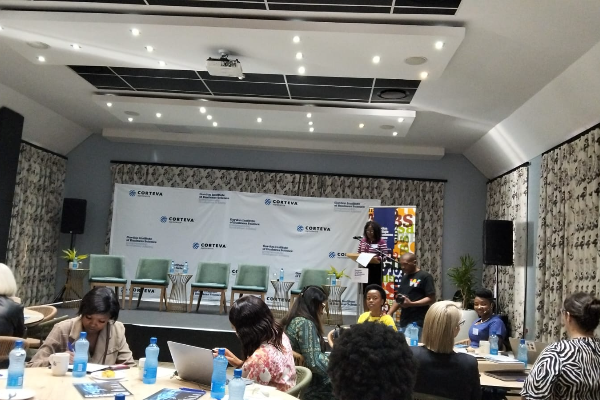
Access to finance was identified as another major barrier, particularly for emerging farmers. Mphahambo, speaking from a financial institution perspective, noted that many farmers struggle with compliance requirements and preparing bankable business cases further emphasising the need for stronger financial literacy and better application processes to unlock funding opportunities.
“Basic issues such as incomplete applications or lack of compliance documentation often delay or prevent access to finance,” he said, adding that targeted training programmes are being introduced to address these gaps.
Panellists also highlighted the importance of building strong local markets before pursuing export opportunities. Engelbrecht pointed out that many farmers are pushed too quickly into export markets without the necessary scale, consistency and reliability required to succeed.
“The biggest opportunity lies in strengthening local markets first—building credibility, trust and production capacity—before expanding into exports,” he noted.
Beyond technical discussions, the event placed strong emphasis on mindset transformation as speakers encouraged women agripreneurs to move beyond survival and aim for sustainable growth and leadership within the sector.
The SoilSistas programme, they said, is designed to unlock potential by connecting participants with opportunities, networks and skills that break traditional barriers.
The roundtable also featured networking activities and collaborative sessions, including a symbolic planting exercise aimed at reinforcing the programme’s commitment to growth and sustainability.
Participants repeatedly stressed that empowering women in agriculture is not only a social imperative but a strategic necessity for addressing broader challenges such as food security and climate resilience.