

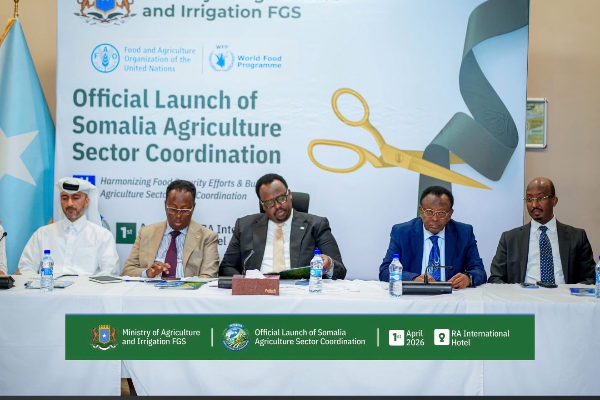
Somalia has launched a new national agriculture coordination platform aimed at strengthening food security, improving farmer livelihoods, and aligning efforts across government and development partners in the country’s critical agriculture sector.
The government-led initiative, officially unveiled on April 1 in Mogadishu, brings together key ministries, international organizations, and stakeholders to streamline agricultural development programmes under a unified framework.
The platform is spearheaded by the Ministry of Agriculture and Irrigation, with support from partners including the Food and Agriculture Organization (FAO) and the World Food Programme (WFP).
Deputy Prime Minister Salah Ahmed Jama, who presided over the launch, said the coordination mechanism is designed to harmonize fragmented interventions and accelerate progress in agricultural productivity.
He emphasized that the platform would help improve farmers’ livelihoods while strengthening resilience to drought and climate shocks.
“This platform will serve as a key driver for improving the livelihoods of farmers and securing sustainable food systems across Somalia,” Jama said during the launch event.
Officials say the initiative addresses long-standing inefficiencies in Somalia’s agriculture sector, where multiple actors have often worked in isolation.
By providing a centralized structure for planning, information sharing, and resource mobilization, the platform is expected to reduce duplication of efforts and ensure more strategic investments.
Minister of Agriculture Mohamed Abdi Hayir noted that the new system would enable better coordination of development, recovery, and long-term resilience programmes across the country’s agri-food systems. The platform also promotes transparency and evidence-based decision-making, helping stakeholders track progress and align priorities.
The initiative is aligned with Somalia’s broader national development frameworks, including the Agriculture Transformation Strategy (2025–2029) and the National Transformation Plan, which aim to modernize the sector and boost productivity.
It also supports international commitments under the United Nations Sustainable Development Cooperation Framework, particularly in areas such as food security, climate resilience, and inclusive economic growth.
International partners welcomed the move, describing it as a significant step toward improving coordination between humanitarian and development efforts. Representatives from FAO and WFP reaffirmed their commitment to supporting the platform, highlighting its potential to integrate agricultural production, nutrition, and resilience-building initiatives.
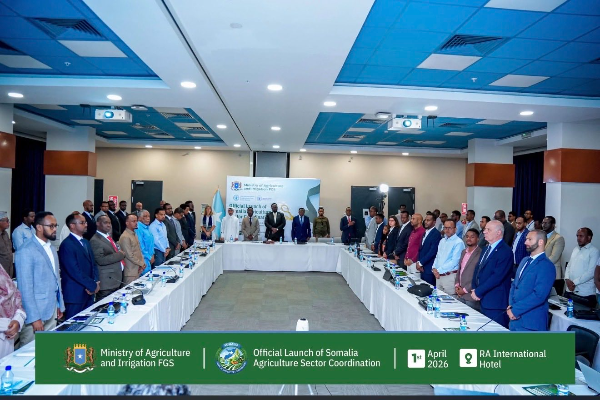
The launch event brought together a wide range of stakeholders, including government officials, UN agencies, non-governmental organizations, private sector actors, and farmers.
Participants endorsed the platform’s governance structure and operational roadmap, signaling broad support for a coordinated approach to transforming Somalia’s agriculture sector.
Agriculture remains the backbone of Somalia’s economy, contributing significantly to employment and livelihoods, particularly in rural areas. However, the sector faces persistent challenges, including climate variability, limited infrastructure, and fragmented institutional support.
Authorities believe the new coordination platform will play a pivotal role in addressing these challenges by fostering collaboration, improving efficiency, and driving long-term agricultural transformation.
With the initiative now operational, attention is expected to shift toward implementation, as stakeholders work to translate commitments into tangible gains for farmers and enhanced national food security.