

According to latest research by Research Intelo, the Global NB-IoT Agriculture Sensors market size was valued at $1.2 billion in 2024 and is projected to reach $8.6 billion by 2033, expanding at a CAGR of 24.7% during the forecast period of 2024–2033. The principal driver for this robust growth is the accelerating adoption of precision agriculture technologies, which leverage NB-IoT (Narrowband Internet of Things) sensors to optimize resource usage, increase crop yields, and improve farm management efficiency. With the global agricultural sector under increasing pressure to feed a growing population while minimizing environmental impact, the integration of NB-IoT-enabled sensors provides real-time data insights, enabling smarter decision-making and sustainable farming practices.
The NB-IoT Agriculture Sensors Market is experiencing rapid expansion, driven by the global shift toward connected farming ecosystems. This surge is directly linked to rising food demand, dwindling natural resources, and the adoption of precision agriculture technologies that depend on low-power, wide-area connectivity.
Key Market Drivers
Rising Demand for Precision Agriculture
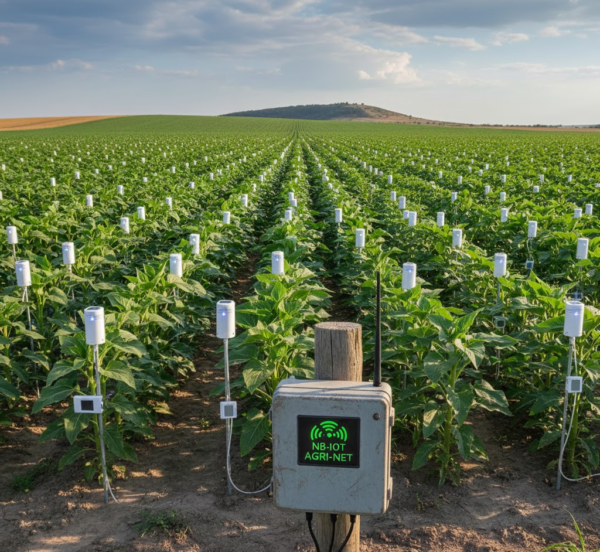
Precision agriculture requires continuous field monitoring, and NB-IoT sensors provide cost-effective, long-range communication for farms of all sizes. Their compatibility with existing cellular infrastructure accelerates adoption.
Need for Sustainable Farming Practices
Climate change, resource scarcity, and global food security concerns are pushing farmers to adopt technologies that ensure higher yields with lower environmental impact. NB-IoT-enabled sensors promote sustainability by minimizing wastage and enabling targeted interventions.
Government Support and Digital Agriculture Policies
Many countries are implementing smart farming programs, agricultural subsidies, and IoT adoption incentives. Governments also encourage telecom operators to enhance NB-IoT networks in rural regions, further fueling market growth.
Challenges Hindering Market Growth
Despite strong momentum, the market faces certain challenges. Limited network infrastructure in some rural areas can delay adoption. Additionally, farmers may require training to understand and fully leverage IoT-based solutions. High initial deployment costs, data security concerns, and the need for robust after-sales support also influence adoption rates.
Technological Advancements
Technological advancements in the NB-IoT agriculture sensors market are accelerating the shift toward hyper-connected and data-driven farming. Modern sensors now integrate AI-enabled analytics, edge computing capabilities, and multi-parameter detection to capture soil, crop, and environmental insights with greater accuracy. Enhanced battery efficiency, solar-powered modules, and ruggedized designs ensure long-term operation in harsh field conditions.
Competitive Landscape
- Huawei Technologies Co., Ltd.
- Ericsson AB
- Vodafone Group Plc
- Qualcomm Technologies, Inc.
- Nokia Corporation
- u-blox Holding AG
- Quectel Wireless Solutions Co., Ltd.
- Telit Communications PLC
- Sierra Wireless, Inc.
- Libelium Comunicaciones Distribuidas S.L.
Future Outlook
The future of NB-IoT agriculture sensors looks highly promising. As telecom operators continue to expand NB-IoT networks, sensor costs decline, and AI-driven analytics become more accessible, adoption will accelerate across small and large farms alike. The integration of NB-IoT with cloud computing, satellite imaging, and digital twins is expected to redefine predictive farming, enabling farmers to manage operations with unprecedented accuracy and efficiency.
Source: https://researchintelo.com/report/nb-iot-agriculture-sensors-market