

When it comes to nature; rareness is our narrator in the story of change.
With species extinction accelerating and global biodiversity declining at unprecedented numbers in our history, the Western Cape is showing a promising trend-shift towards non-institutional conservation efforts led by individual landowners.
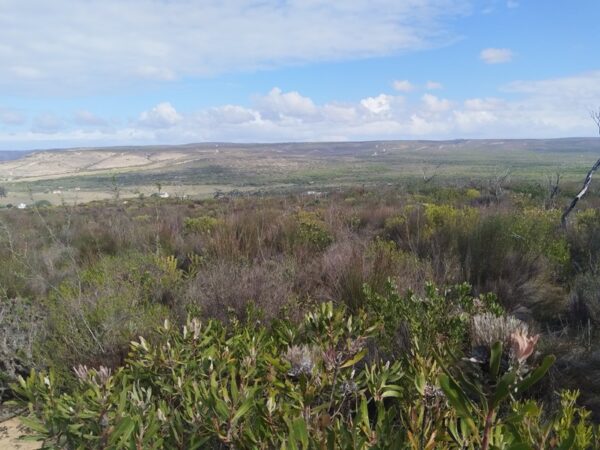
It was recently reported widely that during the past year CapeNature significantly increased its protected conservation area network by 81,715 hectares, spanning key regions from the Garden Route to the Cederberg and a diverse range of ecosystems from lowlands fynbos to mountain catchments. Over 20 new nature reserves have been integrated into the Western Cape province, with most of the land attributed to private owners working in partnership with the CapeNature’s Biodiversity Stewardship Programme – which allows them to voluntarily commit their properties as protected territory. This is a crucial stride towards achieving adequate biodiversity conservation as the Cape floristic region is one of 36 recognised global biodiversity hotspots, while rich in fauna and flora, also being among the most highly threatened.
While the initiative to rezone and designate private lands formally to reservation wards is completely praiseworthy in itself: as many of these interstices are wedged between or otherwise border working agricultural plots, questions remain regarding implicit responsibilities of ownership and how these nascent conservation districts should be effectively managed in the long run. In other words: now what?
Everybody likes to create. Nobody likes to do maintenance.
Encircled by human industry, wildlife custodianship requires more than passively cordoning off a space to leave nature to its own devices. No reserve exists in clinical isolation from the land or communities surrounding it and ultimately the planet is one big ecosystem which we taxonomically subdivide into, ostensibly, distinct biospheres. Nature does not draw arbitrary lines, however, nor does it recognise the red tape of man-made borders. Even the act of fencing in protected land is not neutral – like roads and artificial waterholes it actively shapes biodiversity and wildlife dynamics, acting as an ecological filter.
The removal of alien plant species remains a perennial labor, particularly with invasive trees such as Rooikrans (Acacia cyclops), Black Wattle (Acacia mearnsii) and Poplars (Populus simonii) growing prodigiously in the Western Cape region, handily overwhelming indigenous vegetation if left unchecked. Protected areas usually sit among farming areas that are often overgrazed and facing challenges such as soil depletion and aridification due to monocropping and the ongoing consequences of climate change. Pesticides, herbicides and chemical fertilisers – deleterious to indigenous species – don’t tend to remain neatly in the Petri dish of a single commercial crop field, but diffuse out readily with irrigation run-off, wind and rain. The loss and destruction of habitat can happen unintentionally, and problems are left to silently perpetuate if the land is not adequately sheparded.
Private nature reserves are not just a convenient tax break or greenwashing or a feel-good bureaucratic or publicity exercise – they require attentive stewardship, and where possible, a repositioning towards ecofriendly and regenerative agricultural methods in their vicinity that will complement indigenous biodiversity. Where wild fauna is present, custodians need to be wary of poaching while educating their neighbours as collaborators in keeping wildlife safe such as putting up signare to remaining vigilant while driving on nearby roads – or shifting paradigms on certain wildlife species that are perceived as pests to be hunted, rather than the vital links in the ecosystem that they actually are. Indigenous wildlife relies on indigenous species, and vice versa. Human hostility towards predatory species still prevails – a fraught reality both social and political that almost every private custodian will inevitably need to navigate, balancing the trade-offs between guardianship and amicable neighbourly relationships.
Private stewards benefit from allocating as much land as possible to nature reserve space as biodiverse hotspots have a sustaining effect on the lands around them – with indigenous plant species well adapted for erosion prevention acting as land-loss buffers, accommodating pollinators and other beneficial insects and acting as a refuge for soil microorganisms and fungal mycelia that form an integral part of healthy, sustainable landscapes. Where wildlife has already been eradicated, these new reserves can provide a sanctuary for the reintroduction of indigenous species, which with curated community involvement can be a catalyst for environmental education and appreciation.
Where land management proves untenable, these slots can be designated as wildlife corridors to connect fragmented habitats, allowing fauna to move safely while avoiding urban and agricultural developments, promoting movement for feeding and better genetic flow within species. Private stewards however do not stand alone. The provincial government, the Department of Agriculture and monitoring & permitting agencies – often under-resourced – need to be engaged in assistance with alien clearing and in offering advice and support on ecosystem management, especially where reserves include critically endangered shrublands such as Renosterveld. The guidance of regional inspectors should be adhered to as they are valuable partners in conservation – playing a critical role in enforcing environmental legislation, combating crimes against wildlife and ensuring compliance. Organisations such as Conservation Outcomes can be employed to work alongside landowners to more shrewdly manage protected areas and conserve biodiversity outside of state reserves.
Biodiversity, or bust.
A new study conducted across Africa found that, on average, sub-Saharan Africa has lost around 24 percent of its original biodiversity, with large mammals reduced to a fraction of historical numbers. It also showed that more than 80 percent of the continent’s remaining biodiversity persists outside of formally protected areas, embedded within populated regions, including farmed, urbanised and industrialised lands. This means that without private enterprise and broad community assent effective conservation over generations may prove to be something of a pipe dream. The Kunming-Montreal Global Biodiversity Framework targets a “30×30” global commitment to protect at least 30 percent of lands, oceans and inland waters as nature reserves by the year 2030, underscoring the necessity for localised action in safeguarding biodiversity and restoring ecosystem functions like carbon sequestration and water regulation. This makes inclusive conservation strategies and private stewardship a paramount enterprise for the successful future of retaining the very biodiversity that mutely serves as the foundation of our food security, health, economies and broader livelihoods.
The ‘Tragedy of the Commons’ happens where communal and natural resources are ultimately depleted or destroyed through individual overuse, mismanagement or excessive extraction – but it is not too late to make a difference and this need not be our end result. Properly executed, private stewardship can be transformative in conservation work and sustainability. As we sit on a turning point in biodiversity conservation, with proper management we can rewild and restore nature – avoiding the societal awkwardness, or perhaps the shame of knowing that what lives before us now may never live again if we don’t grapple meaningfully with biodiversity loss. Local stewards and local institutions can pivot to become power players in preserving the treasures of indigenous natural life – preventing degradation and revivifying biodiverse hotspots before we reach the point where lands cannot recover without drastic interventions, if at all.
Says Gill Simpson, Executive Director of Wild Rescue, “As a private owner having personally financed the purchase of our own nature reserve around ten years ago around the Gouritz cluster biosphere, we can only applaud the significant addition of protected areas in our province, with its rich but vulnerable wildlife. Our own backyard is part of the fynbos floral kingdom and is the only area in the world where three global biodiversity hotspots converge. As such it’s a particularly sensitive region that requires discerning and proactive management. CapeNature has been an indispensable partner in our own stewardship and in overcoming the challenges that have emerged in the management of this special terrain. We urge private landowners new to caring for reserves to work closely with the regulatory and monitoring bodies, as well as local communities and neighboring farmers to ensure that conservation efforts run optimally, that difficulties can be anticipated and that instances of misapprehension or unwitting neglect can be minimised.”