


A pack made of paper is not automatically a pack that can be recycled here ,By Edith Leeuta, CEO, Fibre Circle
Paper sacks treated for wet strength were built to survive moisture, and the chemical resins that give them that strength make them non-recyclable in most mill environments. Testing found no economically feasible conditions for recycling the formats then in use, and the answer came from the design side, with a new resin that breaks down in the full water contact of repulping. New potato sacks that can be recycled with cardboard in ordinary mills have since been launched.
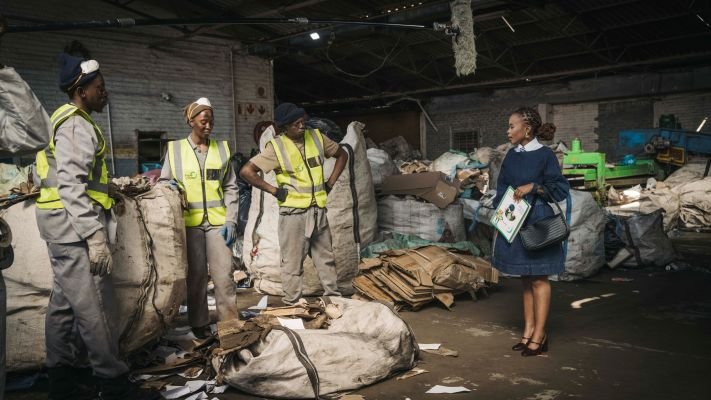
The same question applies to many packs on South African shelves. A pack made mainly of paper can still be difficult or uneconomic to recycle because of coatings, barriers, adhesives, inks, laminates or composite construction, and a clean carton in the right bin still depends on a mill that can process it and a market that will buy what comes out. South Africa has an established paper-recycling system, with overall paper collection above 60% in recent years, carried by reclaimers, collectors, buy-back centres and mills, and the system works best when packs arrive designed for it.
Sustainability and recyclability in one decision
Packaging changes for good reasons. Lighter packs, better barriers and the move from plastic to fibre can reduce environmental impact, yet a change that makes a paper pack harder to recycle locally gives the gain back at the end of the pack’s life. Life-cycle thinking helps designers weigh those trade-offs across the whole packaging system, and it works best next to a practical test of whether the pack can be recycled here.
Local evidence
Fibre Circle is commissioning a dedicated laboratory to assess the recyclability of paper and paper packaging against South African collection, sorting, recycling and end-market conditions. The laboratory will house the Kadant Autolab, recommissioned once the required utilities are installed. Commissioning is planned for October and November, technical training follows in December and services are targeted from January 2027. Environmental claims such as recyclable need to be accurate, verifiable and substantiated under frameworks like SANS 14021, and the laboratory is intended to give industry local evidence to support them. It does not create a new labelling standard.
Bringing the value chain together
On Thursday 26 November, Fibre Circle will bring the paper and packaging value chain together at the Bryanston Country Club in Johannesburg for its Speaking Together colloquium. Last year’s edition, From Waste to Work, drew the Department of Forestry, Fisheries and the Environment, municipalities, waste picker advocacy groups, retailers, brand owners and mill partners into one room to work through sector priorities. This year’s theme, Designed to Come Back, asks what it would take for paper packaging to be designed for the South African recycling system it must return to.
Two sessions, on recyclability and on sustainability, use packaging from the Gold Pack finalists to look at what changed in each design and why it matters. Delegates should leave with a common understanding of how recyclability is assessed against local conditions, a clearer view of how recyclability and sustainability can be designed together, practical principles for producers, converters and retailers, and a shared sense of what each part of the chain is accountable for. Households that separate their paper, collectors who carry it and recyclers who process it already do their part, and the decisions made at the drawing board determine whether that effort ends in a pack that comes back.
Edith Leeuta is CEO of Fibre Circle, South Africa’s Producer Responsibility Organisation for paper and paper packaging.