

Kenya’s dairy sector has progressed through investment in improved breeds, farmer training, milk collection and processing. Yet affordable feed, reliable services and efficient markets remain essential to raising productivity and incomes, a Heifer International Kenya assessment says.
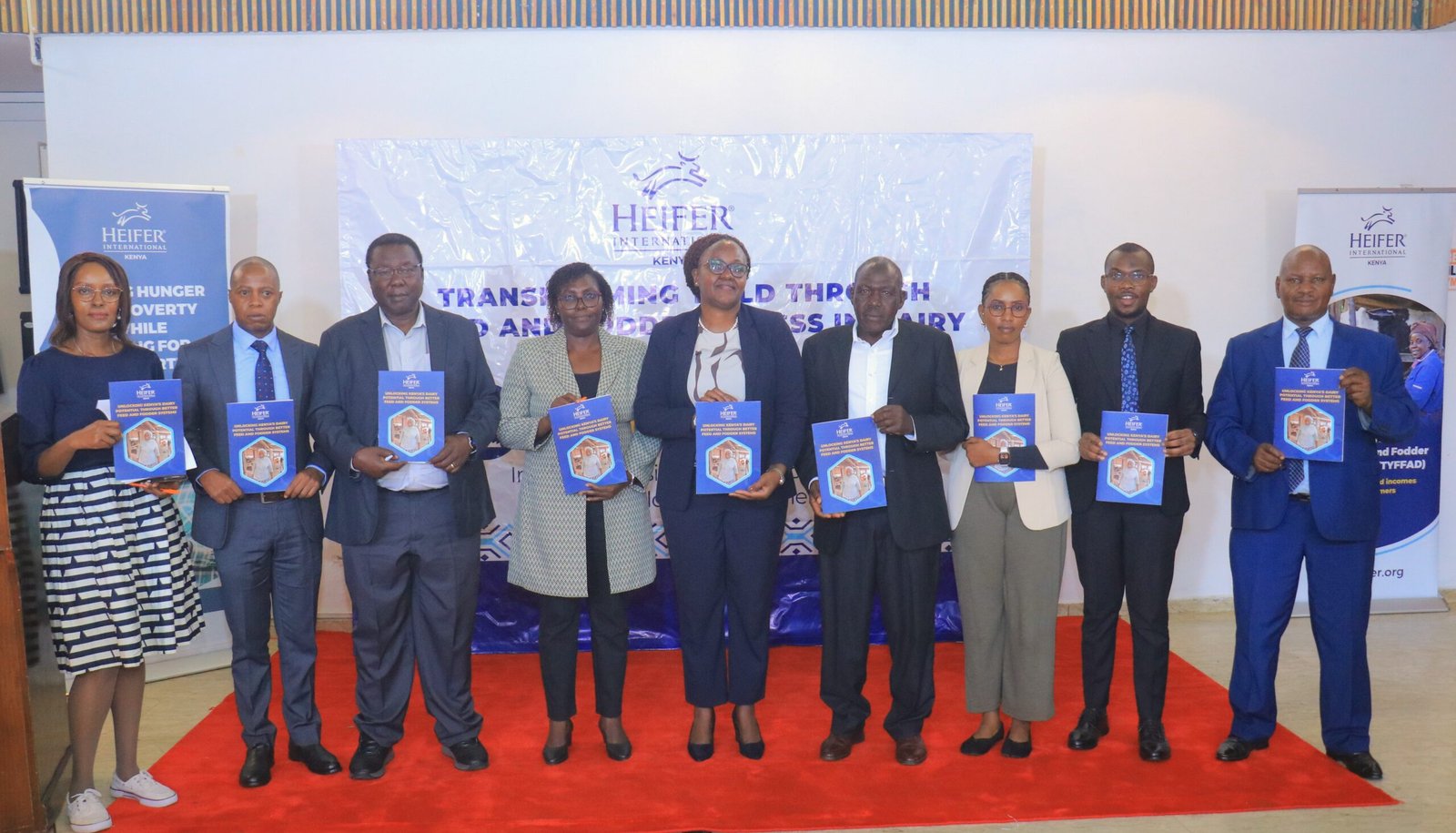
Findings from Heifer’s Dairy Value Chain Gap Analysis were presented at a media roundtable in Nairobi on November 19. Journalists, government, researchers, farmers, financiers and partners discussed opportunities to strengthen the industry.
The assessment comes as Kenya pursues productivity under the National Agri-food Systems Investment Plan (NASIP 2026–2030), which prioritises commercial feed, mechanised fodder production, conservation and storage.
Kenya produces 5.2 billion to 5.76 billion litres of milk annually, against domestic demand of 12.76 billion litres. The Ministry’s investment plan estimates a national feed availability gap of 30 million tonnes annually, based on 2021 figures.
The study reviewed interventions in 11 counties, with detailed assessments in Nyandarua, Embu and Elgeyo Marakwet. It involved 54 engagements, including nine farmer focus groups and interviews with cooperatives, suppliers, processors, financiers and development actors.
Feed and fodder emerged as constraints. Farmers face high costs, seasonal shortages, inconsistent quality and limited mechanisation and conservation services. Solutions must develop businesses able to supply quality feed year-round.
In Nyandarua, smallholders produce three to 15 litres per cow daily, compared with 25 to 30 litres on intensive farms. In Embu, feed costs and quality concerns affect profitability. In Elgeyo Marakwet, shortages, limited veterinary and breeding services, and weak market infrastructure constrain development.
Luke Kesei, chairman of Ainabkoi Dairy Cooperative Society in Uasin Gishu County, said unpredictable milk prices made it difficult for farmers to plan investments.
“Uncertainty in milk prices makes it difficult for farmers to plan and invest in feed and fodder production. Access to affordable financing, mechanization and extension services is equally important,” he said.
Milk marketing and cooperative performance offer opportunities. In Nyandarua, some farmers reported waiting 30 to 60 days for cooperative and processor payments, while informal buyers often pay immediately. Reliable payments and competitive services could help cooperatives retain suppliers.
Heifer International Kenya Country Director Wairimu Munyinyi-Wahome said feed and fodder security was fundamental to productivity, incomes and resilient food systems.
“This assessment gives us an opportunity to move beyond identifying challenges and focus on practical solutions through research, innovation, investment and stronger partnerships,” she said, adding that communities were already taking the lead in building resilience.
Recommendations include investment in commercial feed and fodder enterprises, conservation and mechanisation services, quality inputs and water. The report also calls for stronger veterinary, breeding and advisory services; expanded cooperative offerings; improved milk cooling and marketing; and suitable financing.
The proposals align with national priorities on productivity, commercialisation and climate resilience. The assessment urges more opportunities for women and young people to own productive assets, access finance and join higher-value dairy enterprises.
Paul Ndungu, acting director of regulatory services at the Kenya Dairy Board, representing the State Department for Livestock Development, called for coordinated action.
“Our efforts need to go beyond feed production to include conservation, storage, distribution and market access. Stronger partnerships will be essential,” he said.
Private-sector participation is also important to improving feed quality, affordability and supply. Peris Chege, nutritionist and technical adviser for ruminants at Unga Farmcare EA Ltd, said research must reach farmers through practical extension.
“We must strengthen extension services and equip farmers with practical skills to produce, harvest and conserve fodder at the right stage of maturity, when its nutritional value is highest,” she said.
The findings support Heifer Kenya’s Transforming Yield through Feed and Fodder Access in Dairy (TYFFAD) Project, which aims to improve access to quality feed and develop sustainable fodder markets through partnerships.
The assessment provides evidence for engagement among government, farmers, cooperatives, researchers, financiers and businesses. Stronger services and market relationships can help deliver a productive, inclusive and climate-resilient dairy sector.