



We have separate international agreements for climate change, biodiversity and land degradation – each with its own conferences, targets, institutions and funding mechanisms. But the problems they are supposed to solve are deeply interconnected. Is our approach to environmental governance getting in the way of meaningful progress?
The United Nations Climate Change Conference [COP31] opened on Monday, 9 November, in Antalya, Türkiye, and runs until 20 November, bringing together world leaders, ministers and delegations from more than 190 countries for the annual climate talks. Türkiye is hosting the summit, but under a compromise after both countries bid for the presidency, Australia presides over the formal negotiations on climate finance, the “just transition” and keeping the world as close as possible to the Paris Agreement’s 1.5 degrees Celsius goal, while Türkiye leads the voluntary “action agenda”, with electrification at its centre. The stakes are high. Temperatures have broken records this year and passed the 1.5 degree Celsius limit, and the strongest El Niño on record, intensified by fossil fuels, is expected to cost hundreds of thousands of lives and trillions in damage. The UN argues that rapid cuts in emissions can still limit the overshoot and bring temperatures back down by the end of the century, and the talks will consider Brazil’s roadmaps on transitioning away from fossil fuels and halting deforestation. Australia’s Chris Bowen, president of the negotiations, says the summit must deliver a tangible outcome on implementation “that people can see is real.”
The challenges are considerable. Rich and poor countries are expected to clash over who pays for climate impacts, at a time when wealthy nations are cutting overseas aid and rising interest rates are deepening the debt of poorer ones. The Least Developed Countries bloc has called finance, adaptation and loss and damage “matters of survival” rather than political choices. Fossil fuels remain contentious, any outcome needs consensus, and both hosting countries rely heavily on them, with critics accusing Australia of hypocrisy while it continues to approve coal and gas projects. A Turkish-backed proposal for 35 percent of global energy to come from electricity by 2035 faces opposition, and the United States, which has withdrawn from the Paris Agreement, is again absent, although some US legislators, businesspeople and civil society groups are attending in their own capacity.
There are reasons for hope, though. Renewables and electric vehicles are growing quickly, the war in Iran has strengthened the case for energy security through renewables, a coalition of more than 60 countries has pledged to move away from fossil fuels, and the UN’s climate chief says almost every major economy now sees climate action as a driver of growth, jobs and secure energy. COP31 is unlikely to settle every dispute, but it is an important test of whether governments can turn their promises into outcomes.
As the Paris Agreement for global warming targets is set to unavoidably exceed thresholds; it however has to be said that there is something peculiar about the way we organise our response to the environmental crisis.
We have a conference for climate change, another for biodiversity and another for desertification and land degradation. Each has its own institutional structures, negotiating processes, scientific assessments, national commitments and reporting requirements. Governments send different delegations. Specialists work within their respective disciplines. Funding is allocated through different channels and according to disparate frameworks. Taken together they produce an ungodly amount of documentation, reports, assessments, declarations, proclamations, resolutions, decrees, due diligence, statements, bloated transcripts in the stultifying language of policymaking, a likely unenviable number of spreadsheets and endless general media coverage that strains any mere mortal to follow along with in the broadest of strokes – much less meaningfully assimilate as a cogent whole. While heat storms this year caused a record-breaking toll in human lives and significant infrastructure and emergency service strains – particularly across Europe and the United Kingdom – with the Southern Hemisphere’s turn for a sweltering summer yet to come: we have responded by making an unwieldy juggernaut out of officialism.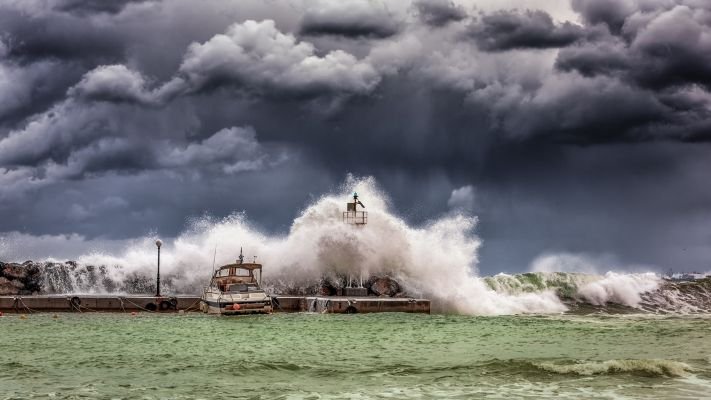
Climate change and biodiversity loss are great calamities of our epoch that won’t yield to stilted, procedural, business-as-usual routines. By thinking more like administrators than innovative problem-solvers, we have built an environmental governance system that divides the natural world unintuitively into separate issues, institutions and areas of responsibility, despite the fact that nature operates through complex, interconnected relationships. This is partly a consequence of how international institutions evolved – but it has also become a practical obstacle and impediment to achieving the very objectives those institutions were originally established to pursue. Meanwhile, the atmosphere, oceans, soils, forests, wetlands, plants, animals and human communities continue to interact as a unified system, entirely indifferent and unresponsive to the administrative boundaries we have drawn around them.
Consider a river catchment. Deforestation or the degradation of its upper reaches can increase erosion and sedimentation, affect water quality and alter the movement of water through the landscape. This has consequences for agriculture, freshwater ecosystems and the communities downstream. Changes in land use can also affect carbon storage, while rising temperatures and altered rainfall place additional pressure on the entire system. What began as a land-management problem; becomes a biodiversity, water, food security and climate problem. The separation is only in our imaginations, and in our ledgers. Yet these issues are frequently addressed through segregated and disconnected policy processes.
How did we get here?
The foundations of much of today’s international environmental governance were established at the 1992 United Nations Earth Summit in Rio de Janeiro. Three major agreements emerged: the United Nations Framework Convention on Climate Change [UNFCCC], the Convention on Biological Diversity [CBD] and the United Nations Convention to Combat Desertification [UNCCD] – also known as the “Triple-COP” of UN Environmental Conferences.
Their creation reflected different environmental concerns requiring different forms of international cooperation. Climate change demands coordinated action on greenhouse gas emissions. Biodiversity requires commitments to conservation and sustainable use. Desertification and land degradation calls for international cooperation on soil, water and land management.
There were sound reasons for establishing separate conventions. Each subject has its own scientific disciplines, technical requirements and political complexities. Climate negotiations, for example, involve energy policy, industrial transitions, emissions accounting and international finance. Biodiversity negotiations must also consider species protection, genetic resources, indigenous rights and equitable benefit-sharing.
The difficulty is that institutional separation has gradually become policy fragmentation. Government departments tend to operate within their own mandates. Environmental ministries may oversee biodiversity commitments, while energy, agriculture, mining, water and economic development fall under different portfolios. Internationally, the conventions have separate secretariats, budgets, reporting systems and negotiating calendars. The result is that policies can be developed and implemented without sufficiently considering their consequences for other environmental objectives.
A country might pursue ambitious renewable energy targets while approving infrastructure in ecologically sensitive areas. Large-scale tree planting might increase reported carbon sequestration while replacing naturally diverse ecosystems with monocultures. Agricultural expansion intended to improve food security might result in habitat destruction, soil degradation and increased emissions. An intervention can therefore produce measurable progress towards one target while undermining another.
The argument is for examining the full environmental consequences of decisions, across all COP sectors, before declaring them sustainable.
The science has already moved beyond the silos
Scientific understanding of environmental systems has increasingly emphasised these connections.
The 2024 Intergovernmental Science-Policy Platform on Biodiversity and Ecosystem Services [IPBES] Nexus Assessment brought together 165 experts from 57 countries, examining the relationships between biodiversity, water, food and human health. Drawing on more than 6,500 scientific references, it demonstrated how changes in one area can generate consequences throughout the others. The assessment also identified the limitations of existing fragmented approaches to governance. It concluded that more integrated, inclusive and coordinated decision-making is necessary to achieve positive outcomes across these interconnected areas.
Climate change is particularly important in this context. Biodiversity loss reduces the resilience of ecosystems and can diminish their capacity to store carbon, regulate water and recover from environmental disturbances. Conversely, climate change alters habitats, species distributions, ecological relationships and the conditions necessary for reproduction and survival. The relationship also works in the other direction. Protecting and restoring natural ecosystems can contribute to climate mitigation and adaptation. Healthy wetlands, forests, grasslands and coastal ecosystems store carbon, regulate water and provide protection against certain climate-related hazards.
However, nature-based solutions should not become a convenient substitute for reducing fossil fuel emissions. Nor should carbon accounting be allowed to obscure the ecological value of natural habitats. A diverse indigenous ecosystem cannot automatically be replaced by a plantation simply because both contain trees or store carbon.
The Kunming-Montreal Global Biodiversity Framework, adopted in 2022, actually recognises this relationship. Target 8 specifically calls for minimising the impacts of climate change on biodiversity and increasing ecosystem resilience, while ensuring that climate mitigation and adaptation measures themselves do not create additional harm to biodiversity.
The international policy framework is therefore not entirely blind to the problem. The challenge is putting these connections into practice.
What do all these conferences actually achieve?
It is tempting to dismiss international environmental conferences as expensive talking shops. There is certainly reason to question the pace of progress, particularly when commitments repeatedly outstrip implementation – however dismissing the conferences altogether would be a mistake.
The Paris Agreement, adopted in 2015, established a framework for nearly every country to submit national climate commitments, strengthen them over time and report on progress. An OECD analysis published in November 2026, examining emissions trends across 170 countries, found that annual global emissions growth slowed from approximately 1.8 percent before the Paris Agreement to 0.7 percent afterwards. A survey of more than 250 climate policymakers and experts also found broad agreement that the agreement had made a meaningful contribution to international cooperation and domestic climate policy.
This is significant, although it does not mean the agreement has delivered its temperature objectives. UNEP’s 2026 Emissions Gap Report estimates that even full implementation of current national commitments would leave the world on a trajectory towards approximately 2.6°C of warming this century – a very large and dangerous increase compared to pre-industrial levels.
The recent CBD COP17 in Yerevan, Armenia, marked the first global review of progress towards the Kunming-Montreal Global Biodiversity Framework. Its findings were sobering: fewer than half of the national biodiversity targets assessed were on track for achievement by 2030. The conference adopted the Yerevan Pathway, intended to accelerate implementation, alongside decisions on biodiversity finance and international cooperation. The UNCCD COP17, held in Mongolia in August, concentrated on land restoration, drought resilience, sustainable land management and the relationship between degraded landscapes and human livelihoods.
These conferences do produce agreements, institutional mechanisms, financial commitments and opportunities for cooperation. They also provide a platform for countries, particularly developing nations, to negotiate collectively on issues that would otherwise be dominated by more powerful economies.
However, agreements are not outcomes. A commitment to restore degraded land does not restore a hectare. A biodiversity target does not protect a species by itself. An emissions reduction pledge does not close a coal-fired power station. The distance between international agreement and practical implementation remains one of the greatest weaknesses of global environmental governance.
Copping to Critique: Money, politics and the problem of priorities
There is another obstacle that receives considerable attention during these conferences: finance.
UNEP’s 2026 Adaptation Gap Report estimates that developing countries will require approximately USD 305 billion annually by 2035 to meet their climate adaptation needs. International public adaptation finance reached only USD 28.2-31.7 billion in 2024. Even if the commitment to triple these flows by 2035 is fulfilled, it would cover only around 20-29 percent of estimated requirements.
For African countries, the implications are particularly serious. Many face substantial climate risks despite having contributed relatively little to historical greenhouse gas emissions. They also carry significant development needs and frequently lack the financial resources to implement adaptation measures.
International funding for protected and conserved areas worldwide fell from around USD 1.2 billion in 2023 to USD 1 billion in 2025. Power Shift Africa estimates the continent’s adaptation needs at close to USD 70 billion a year, against about USD 14 billion in flows, increasingly as loans.
Biodiversity conservation faces its own substantial funding shortfall. The competition between development priorities and environmental protection is often presented as an unavoidable trade-off, particularly in countries where poverty, unemployment, energy security and food production require urgent attention. With that said, this framing is misleading when it treats environmental protection as an optional addition to development. Degraded soils, declining water resources, collapsing fisheries and diminishing ecosystem resilience have direct economic and social costs. The real question is how development is financed and pursued, and whether the long-term consequences are properly accounted for.
This requires confronting some uncomfortable contradictions in economic policy. Governments may announce ambitious conservation and climate objectives while continuing to subsidise activities that undermine them. Agricultural incentives, fossil fuel subsidies, infrastructure investment and land-use policies can work against environmental commitments made by those very same governments.
Without addressing these contradictions, additional environmental funding will struggle to compensate for the damage being encouraged elsewhere in the economy.
What would a more coherent approach look like?
The solution is not necessarily to merge the international conventions into one enormous environmental institution. Their different mandates and areas of expertise remain important. Climate negotiations need specialised knowledge, just as biodiversity protection requires its own scientific and institutional capacity. What is needed is much stronger coordination between them, particularly at national and local levels.
Countries should develop integrated environmental strategies that consider climate, biodiversity, water, land and food systems together. National climate plans and biodiversity strategies should be assessed against each other, rather than developed as separate exercises. Environmental impact assessments should consider cumulative and interconnected effects, including the consequences of infrastructure and energy projects for habitats, water systems and local communities. Finance ministries, agriculture departments, energy planners and environmental authorities need to participate in the same conversations. Environmental objectives cannot be achieved by conservation departments working in isolation while decisions elsewhere continue to subvert and undercut them.
There is also a need for better coordination of scientific information. Climate models, biodiversity monitoring, land-use data and ecosystem assessments should inform common planning processes. The IPCC, IPBES and UNCCD scientific bodies have distinct roles, but their work should increasingly inform shared assessments of environmental risk.
The three Rio Conventions have already recognised this need through their Joint Liaison Group and initiatives to strengthen cooperation. At COP31 in Antalya, 17 November has been designated Ocean, Seas, Nature and Land Use day, explicitly under the banner of Rio Synergy. It is an encouraging acknowledgement of the connections between these agendas. What matters now is whether that recognition produces meaningful changes in policy and implementation.
The work begins long before the next conference
There is a tendency to measure environmental progress by what happens at international summits: the declarations adopted, the targets announced and the money pledged. These are useful indicators of political commitment, but they tell us relatively little about what is actually happening on the ground.
Ultimately, environmental governance has to work where land is managed, water is allocated, energy infrastructure is built, agricultural decisions are made and natural habitats are protected. This is particularly important in countries such as South Africa, where biodiversity, water security, land degradation, climate vulnerability and economic development are closely intertwined. Protecting natural ecosystems is not an isolated conservation objective: it is part of maintaining the ecological foundations on which communities and economies depend.
Conservation organisations, landowners, researchers, local authorities and communities all have a role in this process. Their experience and knowledge should inform policy, rather than being treated as something separate from the international discussions. We have become very good at describing the environmental problems facing the planet. We have developed sophisticated scientific assessments, established international agreements and set ambitious targets. We know considerably more about the causes and consequences of environmental degradation than we did thirty years ago. What remains difficult is organising ourselves to act on that knowledge.
Perhaps it is time to reconsider the way we approach these challenges. The atmosphere does not recognise the boundaries between climate policy and biodiversity policy. A river does not distinguish between water management, agriculture and land restoration. An ecosystem cannot be divided into separate administrative responsibilities without losing sight of the greater narrative of how it functions.
Says Gill Simpson, founder and director of Wild Rescue, “Nature doesn’t operate in departments, and environmental problems don’t arrive one at a time. Yet we have created systems that deal with climate change, biodiversity loss, water security and land degradation as though they were separate concerns. We need to start thinking and working across those boundaries. Real conservation requires us to understand the relationships between things, and to recognise that decisions made in one area can have far-reaching consequences elsewhere. We cannot afford to keep working in silos when the natural world is so fundamentally interconnected. We have no shortage of environmental agreements, targets, strategies and conferences. What we need is a greater ability to translate all that knowledge into coherent action. Nature is interconnected, but our institutions, budgets and responsibilities are often fragmented. Until we address that disconnect, we risk making progress on paper while continuing to undermine the very systems we are trying to protect.”
Our institutions may need different mandates. Our scientific disciplines may require different specialisations – but the objectives must converge. We need to stop treating progress in one environmental category as evidence of progress towards sustainability as a whole. We cannot keep solving environmental problems one at a time when the consequences of those problems are unfolding together.
John Adams, the second President of the first modern constitutional republic, wrote “I fear that in every assembly, members will obtain an influence by noise, not sense; by meanness, not greatness; by ignorance, not learning,” expressing skepticism about the rudderless cacophony and politics of legislative bodies. This admonishment was later revived and rephrased by author Peter Stone in the opening line of a Broadway musical titled ‘1776’, which runs “I have come to the conclusion that one useless man is a disgrace, that two become a law firm, and that three or more become a congress.”
COP31 has an opportunity to shape discord into agreement, to turn pledges into progress and to address the disconnect.