

Written by Kamogelo Mamabolo, GreenWorks Programme Coordinator
The International Day of Climate Action, observed on 24 October, serves as an important reminder that the climate crisis requires more than global commitments and policy discussions. Across South Africa, its impacts are felt in communities facing droughts, floods, unpredictable rainfall and growing pressure on food systems and livelihoods. As the country continues to navigate these challenges, community-led solutions are essential to building climate resilience and protecting the people most vulnerable to its effects.
For South Africa, and indeed the African continent, climate change is no longer an abstract concept discussed in conference halls or scientific journals. It is experienced through prolonged droughts, destructive floods, unpredictable rainfall patterns and increasing pressure on food systems and livelihoods. Communities that have contributed least to global greenhouse gas emissions are often among those most vulnerable to its impacts.
Climate action is not only about protecting the environment. It is about safeguarding lives, livelihoods and opportunities for future generations. Rising temperatures are intensifying climate-related risks, threatening agricultural production, water security and public health. For households already experiencing poverty and inequality, climate-related shocks can deepen existing vulnerabilities and make recovery increasingly difficult. Yet there is reason for hope.
By accelerating the transition to renewable energy, supporting circular economy practices and investing in community-led adaptation initiatives, we can build more resilient and sustainable communities. Local innovation, indigenous knowledge and grassroots leadership must be central to these efforts.
Agroecology offers a path to climate resilience
The possibility of El Niño-related climate variability during the 2026–27 period further underscores the importance of preparedness. Although climate patterns and their local effects remain variable, the risk of extreme weather reinforces the need for forward planning, responsible resource management and measures that protect those most at risk.
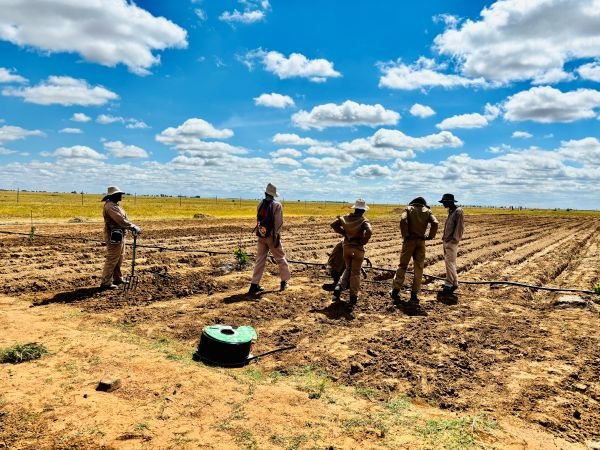
Through the Work.Learn.Grow programme, Seriti Institute recognises that climate resilience and livelihood development cannot be separated. Training young people and small-scale farmers in agroecological production systems can strengthen resilience through healthier soils that retain water and store carbon, diversified farming systems that are less vulnerable to climate shocks, local food production that supports food security, and green livelihood opportunities that contribute to economic resilience. Agroecology is therefore not only an environmental approach; it is a practical adaptation strategy that can help communities respond to a changing climate.
Protecting children from climate-related risks
Children are among those most vulnerable to climate change, despite contributing relatively little to the problem. Climate-related disruptions can affect their health, nutrition, education, safety and long-term opportunities. When droughts threaten water supplies, floods damage schools or food insecurity places additional pressure on households, children can face consequences that extend well beyond the immediate crisis.
At Seriti Institute, we recognise that building climate resilience must include creating safer and healthier environments for children to grow, learn and thrive. Through our aRe Bapaleng programme, early childhood development (ECD) centres and practitioners are supported in developing the knowledge and skills needed to create nurturing environments for young children. Strengthening environmental awareness and the capacity of those working with children can help foster a culture of care and responsibility from an early age. Protecting the environments in which children grow up is inseparable from protecting their well-being and future opportunities.
Linking environmental action to jobs and livelihoods
Environmental awareness must translate into practical solutions that communities can sustain. This requires connecting environmental protection with skills development, economic participation and opportunities for decent work. Through programmes such as Seriti Institute’s GreenWorks and its broader skills development and public employment programmes, environmental activities can help participants develop practical skills while contributing to more sustainable communities.
Activities such as waste management, recycling, composting and water conservation demonstrate how local environmental action can support ecological sustainability and livelihood development. When appropriately supported, these practices can improve resource efficiency, reduce waste and create pathways towards green employment and enterprise development.
However, lasting impact requires more than short-term participation. Green skills must be linked to viable employment opportunities, enterprise support, mentorship and access to markets. Community initiatives also need the resources and partnerships to continue beyond the lifespan of individual projects. Investing in these enabling conditions can strengthen the contribution of environmental programmes to climate resilience and inclusive economic development.
This is particularly important in South Africa, where unemployment and inequality remain significant challenges. A just transition must ensure that communities, particularly young people and those historically excluded from economic opportunities, can participate meaningfully in the emerging green economy
Why local solutions need collective action
No single institution can address the climate crisis alone. Individuals can conserve water and natural resources, reduce waste and make more sustainable consumption choices. Communities can strengthen environmental stewardship, restore degraded spaces and promote sustainable livelihoods.
Civil society organisations also have an important role to play in connecting policy ambitions with the realities of communities. Through partnerships, education, practical interventions and community engagement, these organisations can help translate climate commitments into tangible action.
The scale of the challenge demands coordinated, long-term approaches rather than isolated activities. Climate action must be informed by local needs, supported by evidence and measured not only by activities undertaken, but also by the lasting changes they achieve in people’s lives and the environments on which they depend. True environmental stewardship requires action, accountability and sustained commitment.
As we mark the International Day of Climate Action 2026, let us move beyond conversations and commit to meaningful change. We must bridge policy with grassroots action, ambition with accountability, and short-term interests with long-term sustainability. The challenge is immense, but so too is our collective capacity to respond. The future we want will be shaped by the choices we make today, the investments we prioritise and the communities we empower.
At Seriti Institute, we believe resilient communities are built through collective action, social innovation and a shared commitment to inclusive and sustainable development. Environmental protection, skills development and livelihood creation must work together to support a future in which both people and the planet can thrive.
This International Day of Climate Action, we call on all South Africans to play their part in safeguarding the environment, protecting vulnerable communities and building a sustainable future for generations to come.