

Farmers across Southern Africa are facing one of their toughest operating environments in recent years, as rising fertiliser, fuel and logistics costs, coupled with increasing climate volatility and stagnant commodity prices, continue to squeeze margins and force producers to maximise efficiency on every hectare.
In this, farm input companies are under growing pressure to deliver integrated solutions that combine technology, agronomic support and strategic partnerships to help farmers remain profitable amid rising costs and unpredictable weather conditions.
For Pannar Seed, one of Africa’s leading seed suppliers, adapting to this changing environment means focusing relentlessly on improving profitability per hectare by ensuring that every decision, from product development to farmer support, is measured against the value it creates on the farm.
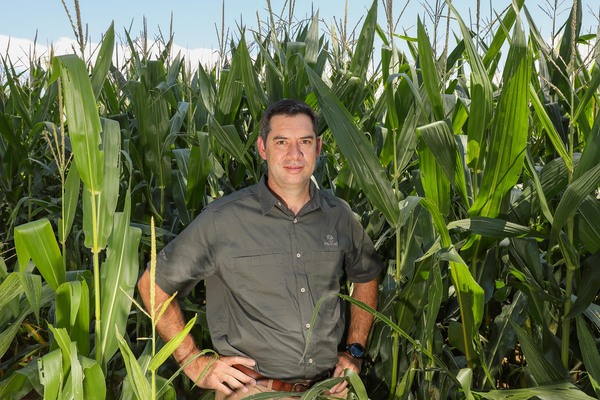
“The sustained cost pressures farmers are facing, from fertiliser to fuel and logistics, are very real. Our strategy has evolved to be highly focused on protecting and improving farmer profitability per hectare,” said Lukas Meyer, the company’s Business Manager in an exclusive interview with Farmers Review Africa.
The company’s strategic pillars
According to the manager, Pannar Seed’s approach rests on three strategic pillars: a best-in-class product portfolio, robust agronomic support and a farmer-first philosophy.
Pannar is prioritising reliable, high-performing hybrids and varieties that deliver consistent yields across seasons and varying environmental conditions.
“Consistency matters just as much, or sometimes more, than peak performance,” Meyer explains. “Our approach is ensuring every hectare works harder and delivers stronger returns, even under pressure.”
The second pillar involves intensive agronomic support. Meyer believes that seed performance cannot be separated from overall crop management and that maximising returns increasingly depends on optimising every input used in production.
The company works closely with farmers on planting decisions, cultivar selection, plant populations and crop management practices to ensure farmers extract more output from the same – or even fewer – inputs.
Strengthening farmer confidence
Under Meyer’s leadership, Pannar’s immediate priorities also include strengthening farmer confidence through reliable execution and practical innovation.
He argues that farmers do not purchase seed as a simple commodity but rather as a season-long investment in performance and risk management.
“Quality, availability and consistency are the foundation from where we build trust relationships with our farmers,” he says.
Innovation, he adds, must be practical and directly address challenges faced on the farm and that technologies that cannot be readily adopted or fail to deliver measurable value have little place in today’s agricultural environment.
Pricing and product positioning
Meyer’s experience across crop protection, agribusiness and pricing strategy in the Africa and Middle East region has also shaped the company’s approach to pricing and product positioning.
Rather than focusing solely on the cost of seed, the company is increasingly framing the discussion around return on investment. “Pricing in agriculture must be anchored in value, not just cost,” he says.
This means aligning seed pricing to yield potential and profitability per hectare while carefully matching hybrids to specific production environments instead of applying a one-size-fits-all approach.
Climate variability, marked by irregular rainfall, prolonged dry spells and extreme weather events, is increasingly threatening agricultural yields and raising financial risks for farmers across Southern Africa.
To address these concerns, Pannar has intensified its focus on climate resilience through long-term breeding programmes and extensive testing across diverse and high-stress environments.
“Reliability is the target, not just in ideal seasons, but when conditions are unpredictable,” Meyer says.
The company’s breeding strategy aims to deliver hybrids and cultivars that can perform consistently across varying environments, thereby helping farmers protect their margins during difficult seasons.
Data-driven decision-making
Data-driven decision-making is also playing an increasingly important role in shaping the firm’s innovation pipeline as Meyer says predictive analytics now influence virtually every aspect of the business, from product development to portfolio management.
By using advanced analytics, the company can identify and advance promising genetics more rapidly while validating performance across multiple environments.
“Farmers don’t just see genetic potential on paper; they experience consistent yield performance,” he says.
Supply chain resilience has become another critical focus area for agribusinesses globally. While disruptions continue to affect agricultural inputs and logistics, Meyer says Pannar’s local production footprint has insulated the company from major supply shortages.
“Majority of our seed is produced locally, hence global supply chain disruptions have had limited impact on product availability,” he explains.
However, rising production costs remain a concern, prompting the company to strengthen local production systems and adopt proactive planning measures to ensure reliable seed supply.
Balancing investment in seed technologies
Balancing investment in advanced seed technologies with affordability remains a key priority for Pannar, which continues to invest in improved genetics and trait development while maintaining a portfolio that caters to both commercial and smallholder farmers.
“The focus is making sure every farmer can access the right technology level in a way that solves their problems and addresses their needs,” Meyer says.
Central to this strategy is the company’s farmer-first approach of listening to farmers and using their insights to shape research and support programmes that improve productivity and manage risk.
“Ultimately, it’s about delivering practical, tailored support that helps farmers improve performance, manage risk and increase profitability per hectare,” he says.
Meyer believes innovation through better genetics and stronger adaptation will help farmers achieve higher yields from the same investment, improving sustainability and competitiveness.