

Market Summary
According to latest research by Growth Market Reports, the global hydroponic farming market size reached USD 13.2 billion in 2024, demonstrating a robust trajectory driven by technological innovation and growing demand for sustainable agriculture. The market is expected to expand at a CAGR of 13.8% during the forecast period, with the market size projected to reach USD 42.7 billion by 2033. This impressive growth is primarily attributed to the increasing adoption of controlled environment agriculture and the need for higher crop yields.
The hydroponic farming market is rapidly gaining traction as the world seeks sustainable solutions to meet rising food demand. The market reflects strong adoption driven by technological advancements, the need for efficient resource use and the rising awareness of water conservation in farming practices.
Key Market Drivers
Rising Demand for Sustainable Agriculture
Environmental concerns and water scarcity are pushing farmers toward eco-friendly practices. Hydroponic systems use up to 90% less water than conventional farming, making them ideal for regions facing water stress.
Consumers are also prioritizing pesticide-free, locally grown produce. Hydroponics meets these expectations by enabling controlled environments that minimize chemical use while ensuring consistent quality.
Technological Innovation and Automation
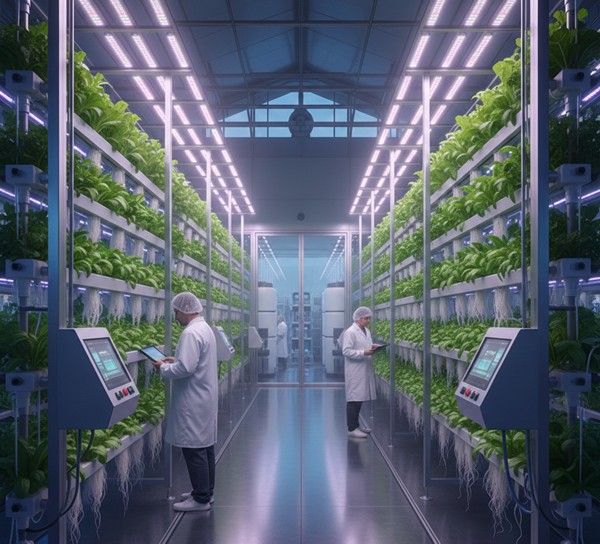
Advancements in LED lighting, IoT-enabled monitoring, and climate control systems are improving operational efficiency. Smart hydroponic farms can automate nutrient delivery, temperature regulation, and humidity control, reducing labor costs and enhancing crop productivity.
These innovations are attracting investment from agritech startups and large-scale greenhouse operators, accelerating market expansion.
Market Challenges
High Initial Investment
Despite long-term benefits, hydroponic systems require significant upfront capital. Infrastructure costs for climate control, lighting, and nutrient management systems can be a barrier for small and medium-scale farmers.
Limited access to financing and technical expertise further restricts adoption in developing regions, slowing market penetration.
Energy Consumption Concerns
Indoor hydroponic farms rely heavily on artificial lighting and environmental controls, leading to high energy consumption. Rising electricity costs and sustainability concerns may affect profitability unless renewable energy solutions are integrated.
Emerging Opportunities
Urban Farming and Vertical Agriculture
The growth of vertical farming in urban centers presents significant opportunities. Hydroponic systems enable high-density cultivation in limited spaces, making them ideal for city-based food production.
Urban hydroponic farms reduce transportation costs and carbon emissions while ensuring fresh produce availability, strengthening local food security.
Expansion in Emerging Markets
Countries in Asia, the Middle East, and Africa are increasingly adopting hydroponics to address food security challenges and limited arable land. Government initiatives promoting controlled-environment agriculture are expected to create lucrative growth avenues.
Training programs and public-private partnerships are also helping farmers transition to hydroponic systems, boosting regional adoption.
Competitive Landscape
- AeroFarms
- BrightFarms
- Gotham Greens
- Freight Farms
- Hydrofarm LLC
- Village Farms International
- Green Spirit Farms
- AmHydro (American Hydroponics)
- General Hydroponics
- Signify (Philips Lighting)
Future Outlook
Continued innovation, coupled with increasing awareness of sustainable agriculture, will drive widespread adoption. As technology becomes more affordable and energy-efficient solutions emerge, hydroponics is set to revolutionize food production. The integration of AI, renewable energy, and precision agriculture will further enhance productivity and sustainability.