

Emojis are not just ornamental; used over 10 billion times daily, when introduced into expressionless text they compensate for tone and mannerism, bridging the gap between written messaging and face-to-face conversations.
More than just smiley faces, thumbs up and flexing biceps – there are exactly 3,953 emojis available in the Unicode Standard today. For those who look to the natural world to emote: there are fauna and flora from ants to gorillas – and from tulips to trees. But one of the world’s most extraordinary blossoms is nowhere to be found.
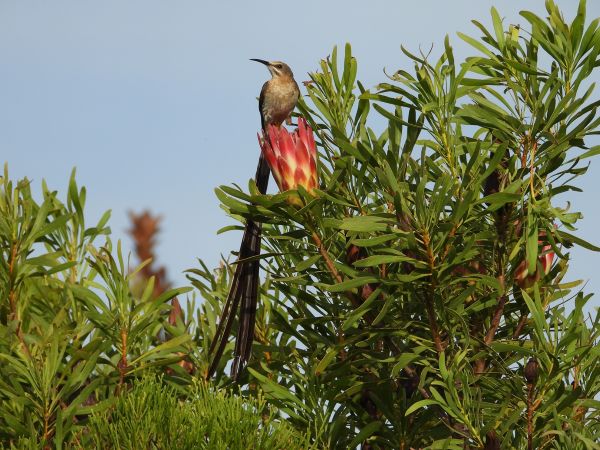
Your keyboard is absent South Africa’s national flower: the Protea – an unmistakable symbol of resilience and transformation, and the flagship species of our indigenous fynbos. Beyond our borders it’s also the ambassador of the Cape Floral Kingdom, the smallest and yet among the most diverse biomes on earth – a landscape shaped by fire, wind and winter rain, where ancient lineages continue to flourish.
Proteas with their sculptural flowers have been blooming in southern Africa for millions of years. There are currently up to 136 formally recognised species of the Protea genus (but thousands more including all known cultivars and subspecies), with the vast majority found in the Cape Floristic Region. This remarkable segment of Southern Africa contains nearly 9,000 plant species, with around 70 percent occurring nowhere else. It’s a place where sugarbirds sip nectar from towering Proteas, delicate Ericas blanket mountain slopes, and where wildfire isn’t the end of life – but the beginning of a new ecological chapter. While there is no single globally ratified “World Fynbos Day,” nature enthusiasts celebrate the Cape Floral Kingdom’s biodiversity during International Day for Biological Diversity on May 22. In the Western Cape, locals also celebrate specific regional events the FynbosLIFE Fair in Lakeside, the Stilbaai Fynbos Festival and the Hessequa Inheems Art Festival in Riversdale.
Yet despite their botanical importance and beauty, many people around the world have never heard of fynbos, let alone seen a Protea. That’s why something as small as an emoji disseminated to online tools and services everywhere could make a big difference.
Logographic communication is nothing new: Chinese Characters and Egyptian Hieroglyphs date back thousands of years into antiquity – representing meaningful units of language rather than specific phonetic sounds – and today emojis are a significant part of our everyday language, even helping shape what people recognise. Emojis don’t just reflect culture; they help create it. The plants and animals that appear on our keyboards become part of our daily conversations and common knowledge.
Imagine being able to end a message with a Protea instead of a generic flower that isn’t even from our continent. Imagine schools using it during lessons on biodiversity, conservation groups using it during campaigns, hikers celebrating a day out on a trail, or South Africans just sharing a little piece of home with the rest of the world. A picture may be worth a thousand words, but an emoji can start and punctuate endless conversations.
While nearly half of our Protea species are facing extinction, one tiny icon won’t protect this biodiversity on its own – but it can spark curiosity. Curiosity leads to discovery. Discovery leads to appreciation, and people are far more likely to protect something they know exists and find aesthetically pleasing.
The Wild Rescue nature reserve in the Southern Cape recently submitted a proposal to the Unicode Consortium for the creation of the world’s first Protea emoji – to finally put fynbos at our fingertips. Though not all submissions are selected to advance for encoding; no such proposals have been listed to date, making this the first known attempt.
The Unicode Consortium is the organisation that decides which emojis become part of the international system that allows electronic devices to represent text and symbols consistently. The Consortium doesn’t actually design the emojis – it only determines which characters should be represented. Every leading platform integrates artwork based on their own internal design schema and styles, often creating an independent version or rendering. Compare for example Apple vs. Mozilla. This is why every emoji looks different depending on the specific device, operating system and applications you’re using – even though, in concept, it’s the same Unicode character. Side-by-side comparisons of variants across platforms instantly reveals major differences. Proposals made to the Unicode Consortium thereby won’t necessarily be an exact copy of the example emoji design that applicants are obliged to provide in order to complete their submission: this is merely an exemplar or model, allowing leeway for platform-specific nativisation and creative license. However, with so many Protea species out in the real world, the possibility of having a number of versions brought to bear on the ‘Internet of Things’ is in itself a testament to its diversity.
Every year the Consortium reviews proposals, which need to demonstrate that an emoji would:
- Be used by many people around the world
- Fill a gap in the existing emoji set
- Have multiple meanings or uses
- Be recognisable even at a small size
- And not duplicate an emoji that already exists
They do not approve emojis simply because they’re cute or because lots of people sign a petition. One of the main factors they consider is evidence that people genuinely want and would use a particular emoji. That means awareness comes first.
People can can help by:
- Searching on Google for “protea”, “protea flower” and / or “fynbos”
- Sharing images, videos and stories about Proteas on websites and social media
- Even the number of published volumes on the subject and the frequency of these words found in digitised books gets taken into account
Search for “fynbos” and “proteas.” Learn online about the Cape Floral Kingdom. Share a photograph of your favourite Protea. Introduce friends from abroad to South Africa’s indigenous flora. Visit a fynbos nature reserve when they’re in bloom and post online about your experience.
Use the hashtags #EmojiForProtea, #ProudlyFynbos and #CapeFloralKingdom in your related social media posts. Read and watch content from relevant pages such as The Fynbos Guy, Wendy Hitchcock, the Table Mountain Fund, Cape Flora SA, the Botanical Society of South Africa and Leon Kluge – and share these resources online. If you’re in or visiting the Western Cape; download the free citizen science platform iNaturalist to record, help identify and share your own observations on fynbos and Proteas, mapping these to their locations.
Says Gill Simpson, executive director of Wild Rescue, “If enough people begin talking about proteas – not simply as flowers, but as symbols for one of the earth’s remarkable biospheres – then the flowerbed of the world’s keyboards will make a little room for them too. The Protea has spent eons earning its place in nature, surviving droughts, fires, shifting climates and human development. Today many of our Protea species are threatened; including some that have very small ranges and face risks from habitat loss, invasive alien plants, inappropriate fire regimes, urbanisation and agriculture. It’s time South Africa’s national flower found its place in the world’s digital lexicon. An improved level of awareness and appreciation will contribute to helping protect our natural fynbos habitats, and encourage simple actions that can make profound differences: like adopting eco-friendly habits, avoiding the picking of these wild flowers, and planting indigenous gardens.”
The Wild Rescue nature reserve will issue updates on its Protea emoji campaign via their social profiles on Facebook and Instagram.