


When Game of Thrones author George R.R. Martin had his stirring moment seeing 400 prehistoric direwolf skulls arrayed on a wall while visiting the La Brea Tar Pits in Los Angeles, little did he know the symbolic and existential importance Aenocyon dirus would play to a family of beloved characters in his wildly successful novels and adaptations. Having yet to write the fantasy series that bewitched global audiences, none could have anticipated that the large American carnivores that existed until over 10,000 years ago were due to receive the untamed publicity that served as an inspiration for genetic engineering company Colossal Biosciences to de-extinct the fossilised species. Now South Africans are about to experience their very own rousing high-tech resurrection as the latex-gloved messiahs at Colossal recently announced their designs to bring back the bluebuck antelope which roamed the foot-sole of the continent until around 200 years ago.
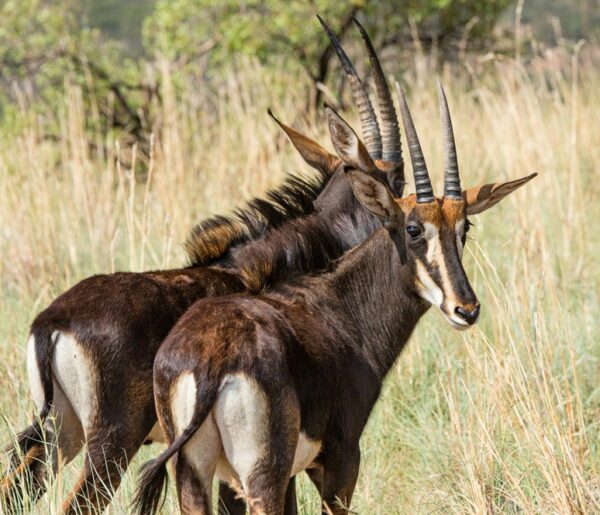
The majestic bluebuck, Hippotragus leucophaeus, with its grey-blue coat and curved horns grazed upon the coastal grasslands of the southwestern Cape region from the Late Pleistocene (over 100,000 years ago) until colonial settlers hunted them to extinction at around 1800. Barely a few decades after it was scientifically documented, the bluebuck was the first historically recorded species of large African mammal to be wiped out, and today their last known remains are confined to a handful of European museums.
Known only for a brief moment in time before it disappeared, and now the sixth species in Colossal’s de-extinction portfolio, the project is currently in the genome-editing phase with scientists introducing specific bluebuck genes into roan antelope cells. The bluebuck genome was sequenced around 2022 from a fossil specimen dating to over 9,000 years ago – now reviving questions around the ethics and ecological utility of restoring bygone animals to nature. Sharing a common genus with roan antelope and sables, contrary to popular thought it is however its own distinct species – according to a genetic study. With the project already two years in development, once complete the Colossal team will create an embryo for implantation into a surrogate roan mother, with an estimated human-like gestation period of nine months.
According to the research, the bluebuck population was already declining into low genetic diversity even before the arrival of Europeans in Southern Africa, probably due to the replacement of grassland habitat with brush and forest – squeezing the species into smaller pockets. For this piece of test-tube wizardry Colossal has clung to the argument that human activity in the Western Cape directly caused the disappearance of the species, justifying the return as a moral reversal – righting a historic wrong. In their support, some point out that traditional conservation activities are failing to keep pace with the current rate of biodiversity loss, and therefore de-extinction technologies are a vital toolkit in wildlife preservation – which may become indispensable. Others still call these animals abominations – a new synthetic species, a ‘Franken-fauna’ that’s merely a vague genetic silhouette of the original instead of an authentic reproduction – thrust into a contemporary natural context and ecological niches that have otherwise been filled or no longer exist. Will the revived bluebuck with its genetic tinkering be more like a “roan antelope with bluebuck traits,” or a hybrid species? Gene editing and CRISPR technology is ethically fraught and blurs scientific lines – and while the resulting progeny may pass visual scrutiny and trigger excitement among conservation futurists; the reintroduction of a species (even when currently extant) is rarely simple or without broader repercussions.
We have to admit that the anthropocene hasn’t exactly been kind to nature, with biodiversity loss largely caused by deforestation, habitat destruction, modern agriculture, industrial works and human-driven climate change. Overhunting or exploitation, poaching and human-wildlife conflicts in the ecotones between peopled settlements and nature reserves are very much a current concern. Today’s laws protect rare and endangered species, though they exist under the ever-present guillotine of a high price tag for human use, collection, or harvesting. With the poachers of the world diversifying their portfolios these days, even plant species are being targeted for trafficking. Permitting and monitoring – already a strict, complicated and onerous task for nature reserves could only be even more arduous to grapple with once we start splicing resurrected fossils into the picture. Not to mention the unknowns and unknown-unknowns and far-reaching, unpredictable ecological effects.
When gray wolves (not an extinct species) were reintroduced into Yellowstone National Park in 1995 the trophic cascade – that’s the chain reaction down the food web – altered the ecosystem to the extent that it even changed the course and flow of rivers. When the vulture population of India declined it led to the death of around half a million people, due to the spread of a deadly bacteria that vultures would have otherwise cleansed from the environment. Perhaps here in South Africa we should be slightly more concerned with the wane of the Cape honey bee, a native pollinator, without which indigenous flora and agricultural fruit yields would collapse.
Nature reserves are where people go on holidays, but the hard work of conservation is no vacation. Those in the field are beset by intricate regulations, including strict guidelines for enclosures, animal care and management, prohibitions on breeding in captivity, culling and its many caveats, and various dilemmas regarding releasing fauna back into the environment. And that’s when you’re just limiting the discussion only to currently living, non-invasive species. In the past few centuries, gunshots (along with habitat destruction) have done far more to shape the zoological and botanical world than natural selection (or laws) could ever keep pace with, or compensate for. One commiserates with the parliamentarian that has the unenviable task of figuring out how to legislate around a lost species that’s suddenly returned to life and the wild.
There are myriad conservation problems that won’t be solved by the technological potential to simply de-extinct a dead species – though it may initially feel that way. Are we at risk of becoming complacent about animal protection – and spending the money required to do so – when there’s an argument that we could merely resurrect whatever has been exterminated? If de-extinction becomes routine, future generations of people may no longer mourn extinction, but accept it as just another stage in a cycle of living, dying, and rejuvenation. The question then becomes whether we’ll still feel compelled to safeguard animals, to rescue them when injured or mistreated, to respect them enough not to be abused for entertainment – and in the end, whether it’s worth saving them before they die off.
When we reintroduce de-extinct species, are we inserting them into an ecological slot which would otherwise be filled by a novel species yet to emerge? Nature innovates. Change is evolution. The biosphere, our living world, is inherently creative and non-deterministic. Given time, life emerges with new possibilities waiting in the wings to be realised as conditions permit – making extinct species potentially an anachronistic genetic nostalgia that weighs down biological progress and the appearance of new biodiversity.
Altruism is often speciesist, and the bias towards charismatic species is hard to ignore. When most people think about conservation; they think about lions, tigers, rhinos, elephants, pandas, gorillas, whales and so on with the beauty pageant of visually striking specimens. While these animals are fully worthy of conservation, minor fauna, flora almost as a whole, and the entire ecological structure down to the microbes in the soil that enable and support life are disproportionately imagined as being of lower importance. Conservation traditionally ignores smaller life forms, and this manifests as considerable disparities in fundraising for direct conservation and research. Attention is a form of currency, and conservation science is overlooking some of the planet’s most important species, including many endangered ones, on the basis of visual appeal – according to a study published in the journal People and Nature. Less attractive or less obvious species are easy to overlook and can pay a steep price in conservation neglect, even when they play key ecological roles. With up to 10 billion microorganisms per teaspoon, soil itself is the single richest species-rich habitat on Earth – likely home to most life on the planet and a quarter of all species, including everything from fungi to bacteria to mammals. Yet it remains vastly understudied and woefully underprotected from chemical pollution and agricultural depletion. As a permaculturist might say: we cannot create human flourishing on an exhausted soil, and we’re still in a food system that largely prizes short-term crop yields over long term soil resilience. Nevermind what’s lurking unexamined deep beneath the oceans, when we’re dauntingly far from understanding the value and diversity directly underneath our feet.
Bringing the conversation back to the bluebuck’s ancestral home in the Western Cape region, CapeNature has warned that even small to medium antelope are coming under threat, vulnerable to the loss of habitat, increased farming operations, population development and by being hunted for food due to economic scarcity. In the “conservation paradox” efforts to protect nature can sometimes produce contradictory and counterproductive results – such as an endangered species transplanted into a different landscape where it thrives aggressively and even becomes invasive. Due to the novelty of de-extinction there has yet to be evidence of revived species being overly successful when released into the wild – but ecosystems are intricate and sensitive, and the impacts of a new resident may not be immediately apparent or completely positive. Like an alien arriving from outer space: for all our thoughtful hypotheticals and best guesses, we just don’t really know what happens next.
The bluebuck was endemic to Renosterveld, which is now a critically endangered but rich shrubland biome within the Cape Floral Kingdom. Known for its immense biodiversity, its fertile shale soils have made it coveted for agriculture, and much of it was cleared for farming. Unique to South Africa and with less than 5 percent remaining, Renosterveld areas today are largely fragmented and many of its plant species are classified as threatened with extinction. While it may at first seem intuitively obvious and logical to return the bluebuck to its native vegetative type as a seed disperser, there’s miniscule margin for miscalculation as the preciously scarce Renosterveld can ill-afford overgrazing while already accommodating other native antelope species.
Says Gill Simpson, Executive Director of the Wild Rescue nature reserve in the Southern Cape, “Plant species, related insects, birds and mammals should not only be valued once they become critically endangered. We need to ensure that they survive to play the vital role in our ecology, on which we all depend. Our earth, which we do not yet fully understand, needs protection – and the establishment of protected tracts of natural land (no matter how small) is vital in ensuring the future of our species. Renosterveld is one example of an entire indigenous, sophisticated ecosystem in decline. No scientific laboratory will be able to recreate it.”
As we reflect on the 21st annual Endangered Species Day this month – prophetically themed around “celebrating wildlife comeback stories” – we mark the importance of protecting threatened and endangered wildlife and their habitats, and raising public awareness around conservation issues. However the current barometer of biodiversity isn’t looking optimistic. More than 48,600 species are threatened with extinction, according to the IUCN Red List. Are we going to run the cost-prohibitive and laborious experiment of needing to resurrect these some day – and rank-ordered according to our own biased selection – or are we merely going to prioritise better on conservation efforts through more effective legislation, protection, public participation, species equality and funding? While the spotlight sits almost entirely on charismatic species, we are letting a lot of present-day fauna and flora go quietly extinct. What a pity that they each don’t have the publicity of a major hit television series to leverage their individual causes. It doesn’t help to view your favourite species in isolation: if you are a lover of birds then you may heed well the loss of insects and moths that sustain them, for example. When it comes to biodiversity you cannot have the top of the pyramid without the foundational layers. If you’ve lost a higher order species it makes more sense to first address the ecological basis on which its existence is predicated.
Is de-extinction perhaps just being done as a theme-park entertainment? Are we playing god by de-extincting a species? Weren’t we playing god when we callously annihilated them in the halcyon days of the wagon wheel to begin with? And what will the effects be on the present ecosystem once this new genetic cauldron spills out beyond the quarantine of a lab?
There’s a natural urge toward a feel-good one-dimensional analysis when you’re bringing something back to life – as genuinely impressive as that is – but if you’re going to impersonate a deity bestowing genomic miracles onto this sweet Earth: at least be an ecologically intelligent one.